

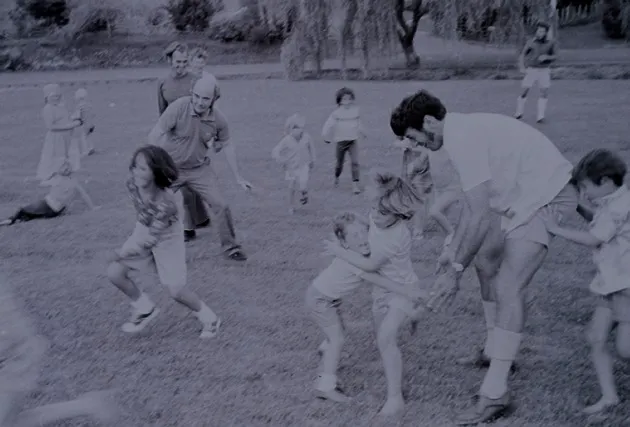
Christmas parties. When I look at the old slides of the Station Christmas parties, I cannot believe the size of the gatherings. Grown ups in summer garb and crowds of kids of all sizes. It just proves what a vibrant place it was, and how we were like one great whanau. And the pics I took of the various Santa’s arriving over the years by all means of transport — the Gnat driven by Santa towing a trailer load of delighted kids. Santa even arriving one year on Peterson’s fat white horse!
I had a turn at being Santa and hated it, as I scared the wee ones who started to howl their heads off even when receiving their present. One year I see we had a magician to entertain the kids — and the grownups. You can’t help looking at the pics trying to work out and remember who everybody was, and especially wondering where all those kids are now, and what they have done in their lives, and what benefit growing up on the Station has been to them. (CliveD).


Forward defensive. At Doug’s Superintendent’s house up the hill, he once proudly showed me his old school cricket bat, signed by all his team mates the day he made a century. But it was now a possum defence/disposal weapon for when Ted drove an escaping possum towards him. Doug needed all his batting skills he said, as if he missed, there was a risk that the possum could run up his leg! So he said it paid to make a small leap in the air as he played the stroke. He also explained the technique (incase I ever needed it) that after grabbing a possum by the tail, you kept it in constant motion, until its head came in contact with something really solid like a tree trunk at the end of your swing. But with very hard skulls, this often had to be repeated a few times — still keeping moving. Bev said she preferred not to watch — and it wasn’t because she was an Australian! (CliveD).
So late back. It was general knowledge that scientist (then Director) Graham Hight loved getting out of the office, and with his high levels of energy would plan to get as much done as humanly possible in a day, and even more sometimes. So it was the day Jock Clayton paired me up with Ian McMillan to bring the first mob of Graham’s sheep in to the yards — pronto! When we arrived at the paddock, Ian asked if he could have first run with his dogs.
It was a glorious run — ‘Amazing’ I said to Ian, as his dog proceeded to chase the sheep up the hill again. ‘Hang on’ he said, ‘I want to run the other three dogs too’. It was an impressive dog trial by a master at the game, but it was me that got a stern talking to from Graham for being so late back asking what the heck had held us up? (John Lane).
The full Monty. Riding along the track, a bee flew down my overalls, so I dropped the bike and started to strip. Now bees are cold critters to the touch and I could feel it descending down to my stomach. Stupidly when this happens, your first instinct is to suck your tummy in — a big mistake, as this just opens up another layer of clothing for the bee to move deeper. So there I was, and when I looked up I was giving the full Monty to a farm tourist group, all with smiles on their faces! (Aaron Malthus).
Sweet-smelling ‘Fog’. I often had to do a working-dog demo for overseas tourists and my Beardie/Huntaway ‘Fog’ loved it. But his problem was that he wouldn’t work until everyone in the group had patted him and taken his photo. The ladies always wanted their photos taken on my bike with my two dogs, one on the back carrier, and one on their laps behind the petrol tank. ‘Fog’ of course always made sure HE was the ‘Lap Dog’ on the front, where he’d get a nice makeup kiss, even after the day he’d rolled on a smelly over-ripe bit of dog tucker. I kept thinking about that smell on the bus afterwards going home, and thinking of the passengers wondering what it was, and where the heck it was coming from! Fog always enjoyed his tourist days! (Aaron Malthus).
Technicians. Graham Hight hated seeing technicians hanging about the office or the yard, when in his view their job was to be out on the farm, and if they hadn’t been given a job via one of his regular morning notes in their pigeon hole in the office, he’d find some job for them as there was always plenty of gorse to deal to. Stuart Peterson once jokingly told me that Graham’s definition of a ‘good technician’ was one working out the back slashing gorse and fern, and after chopping his arm off, would carry on until 4.35pm before coming back to the office!
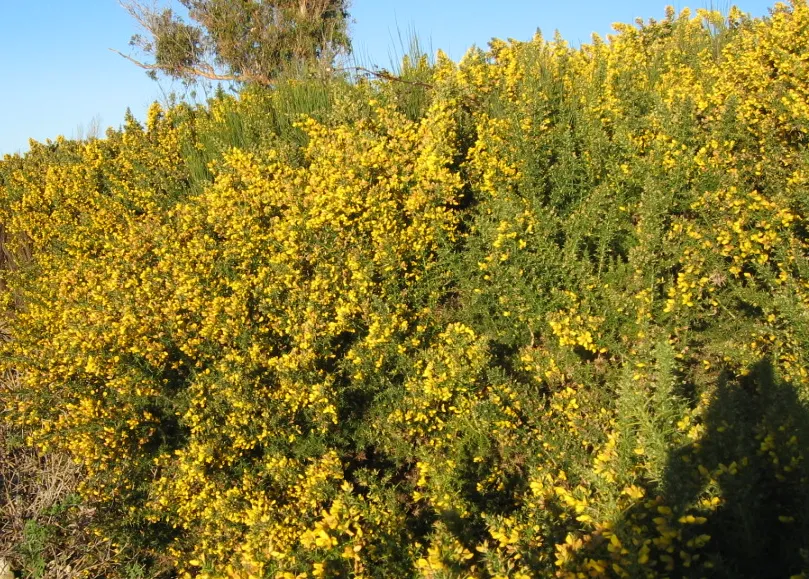
I remember making a table for David Hall to work in my office, and when Graham saw it he wasn’t very happy as technicians worked outside on the farm not in an office! Graham’s desk always had a pile of manilla folders on it with jobs he was working on, and his ash tray full of rollie fag ends. Being a smoker, he was a walking fire bug with his ever-ready lighter, and couldn’t bear to pass a dead gorse bush or bed of fern without setting it alight. One time he did this on his way home from out the back, and overnight the fire got into the bush and burned a very large area. I remember David Hall and me having to replace some burned posts and wires along a length of boundary to keep our sheep in. At least I learned from David the basics of Kiwi fencing from the episode.
John Lane remembers Kit Bird was always in Graham’s cross hairs for a hurry up, as Kit was naturally a slow walker, and in Graham’s view dawdled his way from the Homestead to start work! Graham had a heart attack in his office but being the bloke he was, didn’t call an ambulance and walked back home up the steep hill home to get Dorothy (a trained nurse) to drive him to hospital. They didn’t make it, and Graham died at the Dinsdale roundabout. (CliveD).
Waiting for Rob. Murray Peat was appointed to wait for a scientist who never arrived so became Rob Moore’s technician when he arrived from CSIRO in Australia. So like all technicians, Graham Hight made sure anybody with time on their hands went out the back to chop gorse or other farm work. As Murray had a lot of bulldozer experience from working on his home farm, he was also tasked with working on the old International bully when it wasn’t in bits in Neil’s workshop — which was often! But one day he’d had enough, so went for a quiet snooze on his hostel bed after lunch — and guess who found him? Ma Smith! So back to the gorse me lad before Graham found out! (Sally Peat).
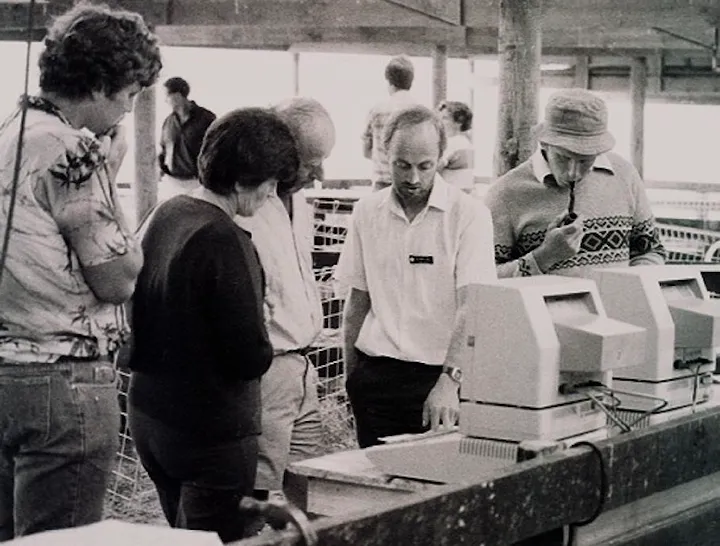
Delivery for Dr Bigham. One day a large carton and a couple of smaller cartons were delivered to the back door of the old woolshed by Raglan Transport for Dr Bigham. This was Murray’s big budget research present from overseas, and a big headache for a few years. It was a FFDA — Fibre Fineness Diameter Analyser. Everyone was curious to view it as it looked like the control deck of the Starship Enterprise, with computer desk top, wiring and pipes stashed inside a large cabinet.
It was going to be used for measuring the fibre diameter of thousands of wool samples that had been collected over many years, and also be available for the NZ wool industry, and generate income for MAF. There was a long history of technical problems that would fill a wool bale in which Roland Sumner and his team were involved. Some of the staff involved in the Fibre group with Murray at the helm were Robin Winter, Pam Speedy, Dot Short, Jenny Moore, and other part time women. When Roland came back from Australia, he was part of this group, and when Murray left to go into private business, John Fitzgerald was in charge of the commercially run fibre testing centre until it closed when new technology came on the market, and many more changes took place under the questionable heading of ‘progress’. (JockC).
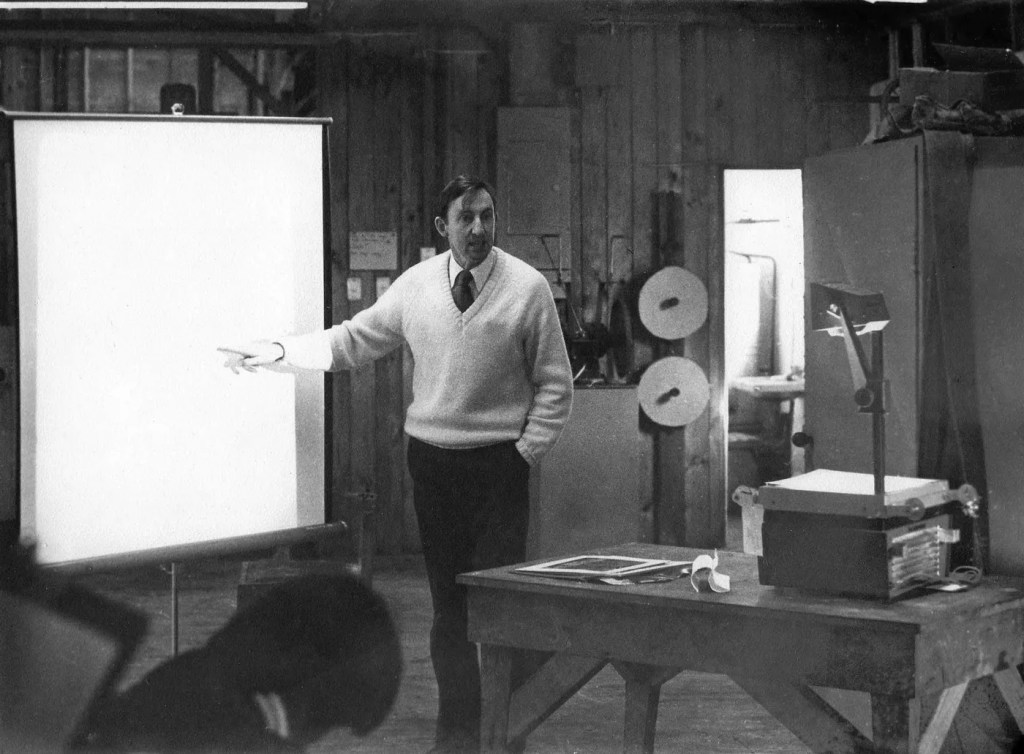
Student visitors. We had many visitors and in the early days we only had a blackboard, chalk and hard forms in the main office area for ‘chalk and talk’. I often used to feel sorry, especially for the students from Massey and Lincoln who were on their annual tour of farms and research stations. Graham and I would get really wound up and be in full flight, so when one of us finished, the other would dive straight in and keep the hurricane of information flowing. But then when we got an Overhead Projector (OHP) and all those coloured pens — did we go to town! When Clarke Hall arrived to the station (a redundant school room from Karakariki) we could have a mini conference. I remember Rob Moore giving a talk to a group of farmers one day in Clarke Hall using his OHP slides, one of which when projected showed one of his boot marks on it. He looked and pointed at the screen all the time, so all we could focus on was the back of his bald head! We never asked for feedback to our performances — visitors always parted with thanks, but they must have been relieved to get away and get to the pub! (CliveD).
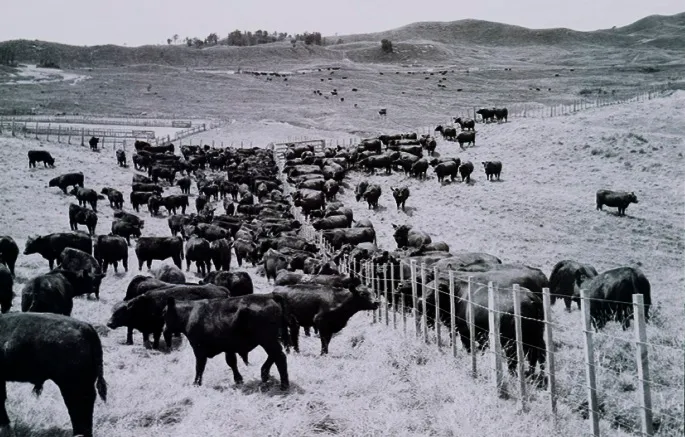
Feeding out. One very wet Sunday morning while feeding hay to the beef herd in Mount 1 with the old Land Rover and trailer, Kit Bird and I slithered all over the place in the mud. Kit was driving and as he changed gear the whole gear lever popped out in his hand. So here we were, well and truly stuck and we didn’t fancy having to walk all the way home. However there was one way we could communicate our predicament, and that was via the C/B radio installed in the vehicle to let the AB technician know how many cows there were to be inseminated.
I called and called the office, hoping that someone would answer but to no avail. I kept calling and finally got an answer from a taxi driver in Cambridge who heard my plea. So I told him our predicament and asked him to call home. All we had to do then was to sit and wait, and after some time, who else but Joe came to our rescue! (Bram Uljee).
Back burning. Joe McLean had made us up cans with long No 8 wire handles and had put tightly-wrapped sacking soaked in kerosine in them — invented by Ted Clarke, which Neil reckons were for the kids to go fern burning. One afternoon Kit Bird and I were sent to the paddock called the Twenty, to back burn ring fern ready for oversowing. The idea was for one person to torch the fern, and the other to smother the flames as they got bigger. We steadily worked our way along the rows of fern towards the boundary fence where the fern patches were quite thick. Kit carefully smothered the flames as we worked our way along, being mindful to keep the flames small.
There was a small Punga tree right on the boundary with dead leaves to ground level and as the fire got near it, the wet sack that Kit used to douse the flames got caught in the barb wire of the fence and took some time to untangle. Within a second the small flames shot up the tree and it was all over. The fire got into a dry gully and very soon there was a huge roar and flames shot high up in the air.
My wife Evelyn who was on her way back from Hamilton saw the pall of smoke rising as the fire burned through several hundred acres of bush. Luckily we kept our jobs! But going back years later the lovely green strip of new bush indicated where the fire had gone through. (Bram Uljee).
Burning off scrub. I am reminded by a story from Bram, burning off fern and scrub out the back when many staff were involved on this particular hot autumn day, including the new station Superintendent — Doug Lang. It was the habit for station directors to go out on the farm with a fire-stick and happily light fires willy-nilly when there was a scrub burning operation planned for land clearing before seeding.
I heard that Ted Clarke would sometimes take a ride on horseback round the station tracks, and fire matches into gorse bushes and patches of scrub as he rode along if the conditions were favourable. Maybe it was practice for dealing with the red tape that came across his desk. One particular day, Kit Bird was working out in the huge Fern paddock and being a thoughtful guy, smuggled a bottle of beer out with him and placed in a creek of fresh flowing cold water, ready for him at the end of the job to quench his thirst. Doug came wandering along the creek after having cleaned out a gully, and noticed a brown bottle lying in the creek. And what’s more it had a cap on it! He wondered if it was the real deal, so ripped the top off, and it was. I don’t recall if Doug replaced the cap, but he certainly put the bottle back in the creek, so poor Kit was a disappointed lad when he turned up later on to slake his thirst, having contemplated this moment of satisfaction all afternoon. No Pale Ale, just Adam’s Ale! (JockC).
Smoked out. ‘The Fern’ was an 80acre paddock near ‘Back Range’ and was covered in layers of ring fern about 30cm high, hence its name. Superintendent Doug Lang planned to get rid of it by burning it off before the aerial sowing of grass seed. Farm manager Joe Mclean provided the staff with Joe’s hand-held burners filled with kerosene-soaked sacking. When lightning the sacking, a small flame burned for some considerable time to torch the fern. The staff were divided into groups and assigned an area to burn off. It was a tedious job and to make it more interesting, we devised a plan on how to position ourselves up wind from another team, in order to ‘smoke our mates out’.
It was a most unpleasant experience to get smoked out by the acrid smoke, and the only escape was to get down to the creek fast to dampen your eyes. One day when our team was smoked out, we headed to the creek fast to wash our eyes and we found Clive sitting in the middle of the creek on a rock with his longs rolled up to his knees, sipping on a cool beer from secret bottles placed there by Doug before the start of work. It struck me how white his legs were having just arrived after 5 weeks by boat from a UK winter! (Bram Uljee).
Who stole our beer? I certainly remember as a new chum going up with Doug to learn how to burn fern, and him once taking 3 bottles of beer with us and hiding them in the creek to keep cool for when we had finished. Well, when we came back stinking of smoke and parched, the blardy bottles had gone — all of them! Some miserable baarstaard (an approved term for such an occasion) had nicked them and not even left the empties. Now come on after all this time — own up! (CliveD)
Lowered shed roof. Jack Beaumont was working on the old International bully somewhere in the vicinity of the main woolshed yards, and there was a big rainstorm on the way! So he decided to head back pronto for shelter to the implement shed by the sheep yards, and by the time he was passing the cattle yards it was pissing down. With the bully in top gear and full throttle, it clattered along the road through the sheep yards, and headed straight towards the open bay of the shed. But a slight misalignment of the steering levers, and the corner edge of the dozer blade hit one of the steel RSJ studs supporting a section of roof. BANG! Neil Wood (who else?) then had to design and make a suitably stronger stud to span two bays of the shed and replace the broken wooden rafter. The twisted steel truss was cut top and bottom, leaving us with a 2-bay opening to the middle of the shed, and much easier for parking wide vehicles. (JockC).
It’s been blardy tested! After a long series of arguments with Station clerk Trevor Gibson (Squeaky) who ordered the petrol, about there being water contamination in the supply, we were ready to clobber him! ‘It’s been tested, it’s been tested’ was his continual response — and no doubt it had! But when you were half way to Waihora or Mangakino and the vehicle spluttered to a stop, and when you lifted the bonnet and saw the carburettor sight glass half full of water — then Trevor was in for it again when you got home! Don’t know how long we put up with this, but eventually it was admitted that the petrol tank was sucking in water from the ground and was replaced. (CliveD).
Don Clark. Don was employed as a shepherd on the Station. He was single, middle aged and rode a white horse to which he appeared to be permanently glued to the saddle, as we seldom saw him walking. Early one morning a group of us on motorbikes were having a pow-wow at the sheep yards including Don, who was of course sitting on his horse. Then someone cranked his motorbike to start it which promptly backfired with a loud BANG! Next thing, Don was on the ground as the horse had promptly bucked him off.
He let fly in a torrent of abuse (for which he held a gold medal), but as you can imagine, we couldn’t contain ourselves which also didn’t please him. Don also had a red ute with his dog kennels permanently fastened to the tray, so wherever he went his dogs went with him, regularly to the Whatawhata pub! He lived in a small shed surrounded by empty grog bottles in the middle of the top yards before they were refurbished. (Bram Uljee).
Last drinks please. One Thursday afternoon (payday), three of us decided to go down for a beer at 5pm as in those days, pubs closed at 6pm. So it was always a rush to get there for your fill. One day, as we were about to leave Don Clark decided to join us. Don was first out of my car, and we had to tell him to leave his belt with his skinning knife in the car. He reluctantly took it off and left it. Don ordered first — three seven-ounce glasses with a double whisky in each, and topped up with port wine. I think these were called ‘depth charges’.
They certainly were! The three of us got a jug of beer each and sat down at a table. Don downed his three drinks at the bar, ordered three more and joined us at the table, followed a bit later by three more! At 5.55pm the barman called ‘last drinks’ and we were expecting to finish our jugs and go by 6pm. However Don had other plans, and arrived at our table with three jugs for us and three more depth charges for him. So we had 15 minutes to down our jugs before we had to leave.
About this time Don reckoned a guy on the other side of the bar was looking at him, and he was keen to go over and sort him out, and he wanted us to back him up. We declined his kind offer, and were all pleased to get back in the car and head for home without any problems from Don. (Stuart Peterson).
A Christmas to forget. On Christmas Day around 1970 I heard a voice calling for help at about 11 am. It came from below our house and I found Don Clarke on the ground holding his leg. He had been killing a sheep for dog tucker and badly cut his calf muscle when cutting its throat. Why he was doing it there nobody can remember, as dog tucker meat came from the Ruakura abattoir and was stored beside the offices. I helped him up to our house where we cleaned his wound and put a bandage on it to stop the bleeding. I put him in the back seat of our car and took off to Waikato Hospital. We had 4–5 extra people staying at home and dinner was planned for 1pm. By the time Don was stitched up it was 4pm and arriving back home Carol dished up a lovely dinner for both of us. Don poked his around the plate, and ate virtually nothing. I took him back to the hostel, where he was never welcome by the other residents, and he didn’t even say thanks. (Stuart Peterson).
Prospective office Girl. While getting organised one day to go to the top yards in the Land Rover, I was asked to take a young lady up with me, to be interviewed by one of the scientists. She was dressed in a mini skirt, wearing high heels and had to get in the dirty Land Rover. I opened the back door and let the dogs in and as they had just come out of their kennels, and in their excitement, started farting with an awful smell as someone must have fed them on ripe meat the day before. Then, half way up the hill while changing gear, a broken loop in my watch strap got caught in the young lady’s nylon stockings just up from her knee. I couldn’t get my hand off and had to carry on in the wrong low gear. You can imagine how I felt! I think the girl couldn’t have had a more embarrassing welcome to the Station! Don’t know if she took the job but she’d certainly have a justified claim for a new pair of stockings! (Bram Uljee).
Signs of trouble. By being mostly alone among the hills there was always an element of vulnerability, but in those days before mobile phones and locator beacons there were only a few things we could do. One was to wave to the topdressing pilots doing the spreading on neighbouring farms. The pilots usually responded dipping their wings and the other was to place a stone on a certain strainer post on the way up. The idea was to knock it off on your way down so the last man knew all had returned. (Bram Uljee).
Seeking votes. Marilyn Waring was the MP for Raglan and she knew hill country farming and farmers. She and Jim Bolger must have requested, and got permission to meet the Station staff, to put over the National party’s merits before an election when National were the government of the day with Muldoon as PM. So we lined up the bench seats in the office area and listened intently to their good news. Doug Carter, the Minister of Agriculture was Marilyn’s uncle and he visited the Station too on one occasion to see what we were doing. He was a really good bloke who did a lot for farming.
But what impressed me most was at least 10 years later, when I was with MAFQual at Ruakura, and was rushed to Christchurch to be the MAF ‘media man’ in the massive snow crisis, Jim Bolger came down as PM to see what was going on, and I was amazed. He remembered my blardy name! And remember of course that Marilyn was the catalyst to get rid of Muldoon. I can’t remember who I voted for that year — probably Marilyn as at least she’d made an effort to come and talk to us at the Station. (CliveD).

Rogue pump. A pump was installed on the bank of the creek at the bottom of the Falls paddock to fill the 2 big mannequin tanks in Mount 1. It was powered by a diesel motor, and a 44 gallon drum of diesel and a hand pump were left beside the shed. On one occasion when I went up to start the pump as the water level indicators showed low volume, I noticed going down the hill that the tanks needed filling, so when at the pump, I started to hand crank the diesel motor.
The crank was a very heavy piece of equipment, and you had to crank it by holding on to the handle with both hands, and with some force turn it to start the motor. As soon as the motor started to cough and splutter, you quickly pulled the handle off the spindle. I followed procedure but somehow the crank handle got stuck on the spindle at a crazy angle, and started spinning at increasing speed. I remember flattening myself on the ground and wriggling backwards out of the shed. I left a note on the shed door not to go near the pump. Later that afternoon I returned when the pump had run out of diesel, and found the handle still on the spindle at a crazy angle. I lightly touched it and it fell to the ground. I reckon it was a close call! (Bram Uljee).
Cable laying. My mate Dave Vennard was constantly complaining that my organising of ‘Casuals’ from the Labour Department to dig trenches with a pick and shovel was ruining them, and not popular! On their last day, they always left us with extensive expletives in their farewell, but we did have one Mr Scott, who rang several months later and offered to shout us a beer at the Eastside tavern. It turned out that when he started with us he was classed as C-grade, but now he was A-grade. But he said he never wanted to do manual labour again, which was surely a success story. (Aaron Malthus).
Bike hoons. One day while working close to the newly acquired Barkers block, I could hear the sound of motorbikes suddenly changing to a high pitch whine, and when getting over a ridge to investigate, much to my amazement I saw Ray Armstrong and David Hall riding their motorbikes through a long row of huge culvert pipes. Suppose at the time they’d say the pipes were in need of close inspection, but now they’ll say they can’t remember and it’s my memory that has lapsed! (Bram Uljee).
Argentinian visiting scientist. It was a beautiful Spring day and he was very impressed with the work that was going on. We got on really well and he relished being among the NZ hills. It got rather hot and as we got to the creek at the bottom of the Falls paddock, he couldn’t resist getting into the creek to cool his face and have a drink. It happened so quickly that I didn’t have the time or heart to tell him that just up from there in the creek was a dead sheep! (Bram Uljee).
A bolt from the blue. Graham Hight and I were driving on The Western Bays road coming back from a conference at Massey, up past Lake Taupo through a lot of Land & Survey country and lambing was just under way. As we flicked past paddocks full of ewes and lambs, it dawned on me that that if we could run a screen through them, and collect the ewes with twins (starting with 2-tooths) on a regular basis, we would be sorting out the high fertility genes from which we could greatly accelerate the rate of improving overall flock performance.
That was the Friday. On the Monday Ted and I rushed off to Rotorua, and without warning I asked for a meeting with the boss Alf Tinkham, a taciturn ‘NO’ man whom I’d heard about. Luckily he was there and granted me time for an informal chat. I briefly explained what I thought we could jointly undertake to rapidly improve their flock fertility. At that stage they were in the 85% lambs weaned/100 ewes to the ram range, and not progressing as the stud industry annually ‘dumped’ their unrecorded rams on them.
I suggested that if we could have access to most of their flocks around that area to ID fertile ewes, we could ‘gatecrash’ the fertility problem and within 5 years they would become leaders in the industry and actually be selling proven high fertility rams. I stressed that we from Whatawhata would jointly manage the programme. ‘Nope’ was the expected reply and I asked why not? ‘Too many other things to worry about’ he said. I knew by chance that he was due to retire in 3 years so I suggested it would be a great legacy for him to leave behind. He sat there and stared at me and started to change colour, and I thought he may be heading for a coronary. He stood up and walked over to the window with his back to me, and after a long interval turned around and slowly walked to the door and called in his 2IC Lloyd Bedford. He introduced me to Lloyd and said — ‘see what you can do with this guy’? Lloyd saw the potential, and the L&S Romney and Angus breeding schemes took off that we all got involved with. Eric Gibson replaced Alf Tinkham and added even more momentum to the schemes. And the rest is certainly history. (Doug Lang).


Assigned to Lands & Survey. Graham Hight called me into his office one day at the end of lambing, and said he and Doug had got permission to identify and tag 2-tooth ewes rearing twin lambs on the Western Bay L&S development farm blocks. So myself and Dick Thornton (and Peter Burton for the last 2 blocks) with our lambing dogs, went down there for 3 or 4 weeks to tag these sheep. We visited 7 different blocks, camping in the shearers’ quarters at each. The percentage of twinning was very low, with only 2 or 3 sheep with twins in every little mob we gathered up, as we walked round each paddock which were quite large.
At the end, we had identified between 850 and 900 2-tooth Romney ewes with twin lambs at foot. At weaning on each block these ewes were gathered together and sent to one location — Waihora, where Peter Guy was the manager. Graham organised some rams with good performance genetic records from other performance bred Sheeplan flocks to mate with these ewes, because it was realised this would be the start of some high-performing ewes and rams that could be used by the L&S farms, instead of the ‘culls’ they were getting from the traditional stud breeders. At the start of the first lambing, Peter Guy had a quick glance over a little hill by his house and was greeted by twin lambs all over the place.
He quickly backed off to consider how he was going to deal with all these lambs to identify and tag them. There was only one way — quickly and quietly as possible, because there would be lots more coming in the next days and weeks. The bosses at L&S Rotorua soon learnt of advance results of this experiment and enthusiastically endorsed the project by instructing the block managers to get the shepherds to identify the next crop of 2-tooth ewes rearing twins to add to the now 4-tooths at Waihora.
So began L&S breeding their own replacement rams for most of their North Island farms.
This created a big stink with ram breeders and stock agents, who could see that their gravy train they had been on for years had come to the end of the line. There were letters to government ministers, breed societies etc complaining about losing an income source. It got worse when L&S started screening their beef cows for performance and breeding their own bulls later on, and supervised initially by Clive Dalton. I consider this ram and bull breeding project as one of the most interesting and worthwhile ones, with the most financial impact of my career with Dept. of Ag/ MAF/ AgResearch. With thanks to my dog Maid who helped me show the doubters and curious, that initial step was possible. That first year, 180% lambs were weaned compared with normal 85% on the blocks.
Geoff Nicholl, a genetic scientist at Whatawhata when Graham Hight died, took over the management of L&S data from the rapidly expanding breeding schemes and became the principal geneticist for them (Landcorp), for many years before his untimely death.(Jock Clayton)
L&S days. Thinking back now, Doug Lang was saying it would be hard to predict what was the massive financial benefit of our Station sheep and cattle breeding work with L&S. And it was such a pleasure for those of us working with the enthusiastic farm managers, their wives and staff. And of course, also memorable were the battles we had with the Romney and Angus breed societies over taking business away from their stud breeders.
And the Rotorua L&S ram and bull buyer (Lionel ?) didn’t like us either, as we stuffed up his annual round of stud breeder visits, welcomed like a god and with the whiskey bottle stopper already thrown away! I’m sure those running the present company ‘Pamu’ which morphed from L&S to Landcorp when ‘going commercial’ have no idea about the work and people that started it all. (CliveD).

Birth site. As a result of increased litter size from the work we got L&S to do, lamb mortality and ewe behaviour at birth became important areas to study. So Dr Ron Kilgour at Ruakura got involved, and he and his team stayed in the shearers’ quarters at Waihora. They first knocked a peg in to mark the spot where the ewe had chosen as her birth site, and where her waters burst and then where her lambs would be born. Ron showed it was the smell of her burst waters that tied her to the site, so it was important to leave ewe and lambs there undisturbed, and not move them soon after birth which was the practice on so many farms.
Some ewes with triplets stayed put for up to 3 days before moving off, and were so well bonded which reduced mortality through lambs wandering off and getting lost and mismothered. Ewes lambing on the tracks on steep hill country were at greatest risk as wet lambs wobbled over the edge of the track and slid down the hill aided by their wet birth coats, and the ewe didn’t want to leave the birth site to retrieve them. Ron’s work created a great deal of interest both in NZ and overseas. (CliveD).
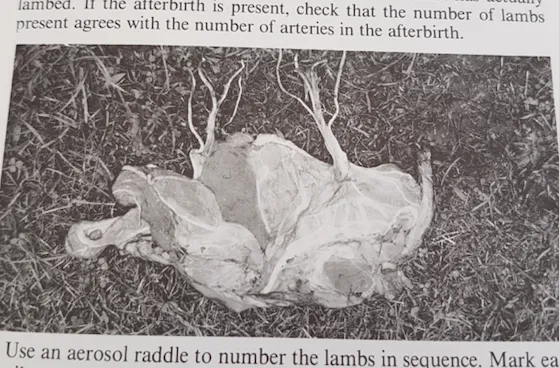
Count the arteries! Bram Uljee remembers Ron Kilgour telling him that as a result of the work at Waihora, you could tell how many lambs a ewe had dropped on the birth site, by checking the afterbirth and counting the number of arteries. If their number didn’t match the number of lambs, then you knew a lamb or lambs had wandered away, or been stolen by another ewe about to lamb. The latter could be a very real problem and many shepherds would lamb thieving ewes to prevent solve their problem.(CliveD).

RIP lambs. Lamb mortality was, and still is, a subject not given much airtime by hill country farmers because it has always been a serious problem, and they just learned to live with it. So the rule was not to count dead lambs at birth or soon after, and get them quickly down the offal hole out of sight. The easiest official count of ‘fertility’ was done by the number of tails at docking if removed. Even then, I remember hearing that some Lands & Survey shepherds were always generous with their docking tallies sent to the office, so the ‘number of lambs weaned/ hundred ewes to the ram’ (the true fertility/fecundity measure) didn’t look too bad, and hence reflect on their management.
The slink skins business caused some fun as farmers had to put the dead lambs at the gate for collection and for all the neighbours to see — and the kids to skite at school about how much pocket money they got from Dad for them! I remember calling in at the slink skin factory in Mangakino one day, and there was literally a mountain of dead lambs waiting to be skinned for export to Italy for gloves. A horrible sight and a horrible job for the workers!
So lamb mortality was a major long-term research topic at the Station, and involved many scientists with papers published in peer reviewed journals. We also wrote articles for the popular farming press and especially the NZ Journal of Agriculture which every farmer subscribed to. We also gave regular presentations at the Ruakura Farmers’ Conference and at our own Station Open Days. Both Graham Hight’s selection lines and my breed comparison trials over many years provided a mountain of dead lambs, (literally a stinking mountain if we’d kept them), which technicians like David Hall and Terry Knight did post mortems on.
The dead lambs collected from the lambing paddocks were delivered to the woolshed either in plastic bags or tied on bike handlebars with baler twine. They were damned heavy to carry around! The plastic bags were an essential to bring in aborted lambs.The main causes of ‘perinatal death’ (defined as in the first 4 days after birth) was starvation/exposure for multiples, caused by mismothering, and dystocia (lambs too large for delivery) for singles. Jock Clayton remembers in the early years, before our staff were trained to do PMs, that all the dead lambs were taken in the Landrover to the Animal Health lab at Ruakura — another stinking job he remembers. That’s where any aborted lambs were taken too.
Our Station research exposed the enormous size of the problem — and the sheer waste to sheep production, especially at a time when increasing production from the hills was paramount. In general terms 20% of lambs born never made it to weaning, and there were all sorts of ways to describe ‘lambing percentage’ to hide this statistic. It was, and still is a problem, and still not talked about freely. What makes sheep production losses even worse is the very difficult subject of embryo mortality, exposed by the advance of scanning ewes before lambing, so you can accurately measure loss of potential lambs between conception and birth. Research again has shown this to be around another 20% and of course is never seen on the farm. Nobody has found a solution to this loss either, and is on the list of things farmers don’t like to talk about!
I remember getting a call from the Ruakura office of Dr Wallace, MAF Research Division Director no less, to explain my article in the NZ Journal of Agriculture about the lamb mortality work we were doing at the Station — and the losses. What concerned him was the shocking figures of how many lambs we were losing, and why did I need to expose this to the farming community? I left with a flea in my ear but my backside was not bruised! I suppose his rear end was in the firing line from the Director General in Head Office, and then the Minister of Agriculture from questions in the House and if the media got on to it. Brian Talboys — a real gentleman was Minister at the time. Happy memories! (CliveD).
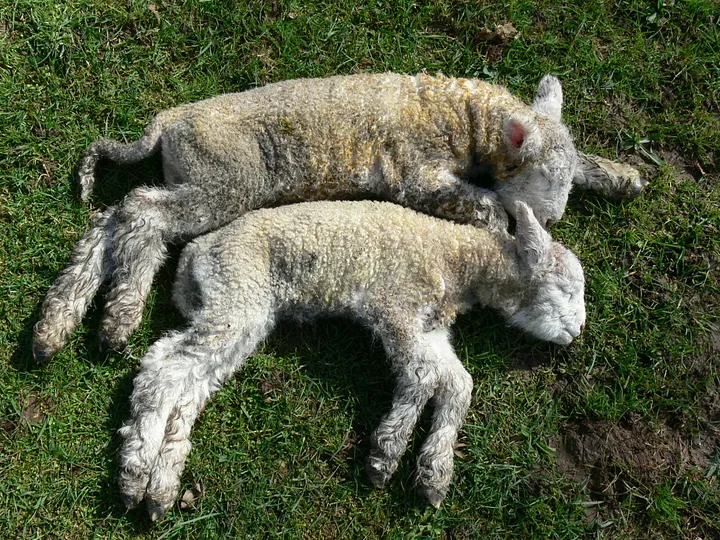
Frightening sums. The breed comparison trial had 5 main breeds of 200 ewes each, over five years so that’s 1000 ewes per year over 12 years. That’s 12,000 ewes. It’s too scary to use the true national average of 20% of lambs lost between birth and weaning, so if we half that, 10% of 12,000 is 1200 dead lambs which made no contribution to the economy from those flocks. (CliveD).
Clover for the hills. About the time David Hall and I arrived as new chums in 1968, Doug had been liaising with Eddie Suckling of DSIR at Ballantrae about suitable clovers to improve pasture production on steep dry hill country. So Back Range1 and Sunshine paddocks were fenced into 5 small blocks for a trial that we looked after. The bits of fern were burned, pasture such as it was grazed hard with the Station’s wether flock, before David and I walked up and down the 45 degree slopes, hand sowing the different clover cultivars.
David remembers one called 4700, and I remember Huia! The wethers were used again to press the seed into the ground as they wandered up and down the hills looking for something to eat poor buggas. David made frames from old water pipes covered in wire netting to protect small areas to be cut and taken to Rukuhia soil research station to a lab, where the staff sorted out for us the proportions of what had grown. DSIR agronomist Joan Radcliffe visited the plots to show us how to do pasture point analysis, by pushing needles through a frame and recording what each touched — grass, clover, weeds, bare ground. We made a small sheep yard along the track, and weighed the sheep every month using a cage hung on a spring balance, from what we can remember. I can’t remember any information being reported from all our hard work over a few seasons, but I do remember two things.
First, my useless attempt with David’s 0.22 to reduce the goat population that made a highway through the plots, and my arse after one day deciding to go up and inspect the plots on one of the last two Station nags, rather than borrow a farm vehicle. It took me just about all morning to get there, and all afternoon to get home. It also took a couple of weeks before the bones in my rear end went back into place so I could sit comfortably. David like me, remembers our work every year when we knock our tomato stakes in, as they came from the sawn-up pasture cages when they were dumped! The area is now in pine trees. (CliveD).
Agronomists invade Barkers. By the time Clive’s breed comparison trial was ending, (wonder what happened to those sheep?), more science was evolving with agronomists and soil scientists, setting up research programmes to study aspects of problems to improve production from North Island hill country farms. Inevitably, it all revolved around improving pasture production with fertilisers, introducing better pasture species, and better grazing management systems.
In order to understand what amounts of pasture animals were eating, or not eating, a method of visual pasture Dry Matter assessment was modified from the one used for cows at Ruakura’s №2 dairy. Many grazing trials were devised by scientists at Barkers and the Nutrition group led by Dr Cornelius (Peter) During, that kept numerous technicians busy for many hours, days, years, rating pasture!
Most trials were set up to measure performance of sheep, cattle, and goats, to differing amounts of pasture fed over short term (approx 2 months) or long term (1, 2, or more years).
Most of the work was involved in pasture rating (pre- and post-grazing), calculating areas for each mob treatment according to their feed allowance and mob size, and setting up the grazing areas. All other stock management practices were included, such as regular weighing, shearing, tagging lambs and calves on the trials etc. It was very labour intensive and some technicians did not own dogs, which necessitated stockmen with dogs to shift mobs to yards or other parts of the trial areas as required. It took an enormous amount of technician and stockmen time. Wonder if it was all published for farmers to read and use, and where? (JockC).

Pasture rating. This was done visually with calibration cuts of usually10, but could be more or less according to the range of expected pasture heights, which was done at the time the paddocks/breaks were rated. The cuts were then washed at the hogget shed to remove mud/dirt, manure, and dried in ovens overnight. The weighed samples were correlated with their visuals, and each paddock/plot dry matter was calculated accordingly. One particular day, Kerry MacGuire, a technician in the nutrition group, had made his paddock assessments, then had to do his calibration cuts. He picked a handy spot near the main sheep yards and equipment shed. There was some nice ‘suitable’ green grass about 50m from the dog kennels, and which stock were wary of grazing because of the dogs. After having cut his samples and washing them, he discovered there was a large amount of dog shit scattered among the grass samples! He didn’t try that spot again! (JockC).
A bevy of blondes. In the 1980s after quarantine regulations had eased up, and European beef breeds became fashionable in NZ, a Northland farmer imported approximately 30 Blonde-d’Aquataine heifers in order to build a stud. He was having reproduction problems with these animals, and for some reason they ended up at Ruakura for the reproduction physiology scientists to investigate.
They were super-ovulated (with a poor response from memory), and embryos were implanted into some of the Hereford cross Friesian cows at the Station on two different dates. This was a bit of income for Ruakura from the private farming sector, and Tim Reardon, Dave McCall, Julie McCall and Gary Powell were all involved in the project.
By due calving date, nothing much had happened except the recipient cows were getting enormous, and we were all anxious about potential calving trouble. The Ruakura vet, Tony Day, decided to start an induction programme so that they would calve fairly soon. The calving day was very wet, and with cows handy to the yards it was obvious most would need assistance. So up the race they went with Tony in charge and we started pulling calves.
I don’t know why he wouldn’t using a calving jack or pulleys to assist, but he made us (two at a time), physically pull with the use of calving ropes. Myself, Bill Navanua, Gary Powell and Aaron Malthus, and probably others were involved. We were in full wet weather gear because of the rain, and though there was a roof over the race, rain was still blowing in on the working area, with water, placental fluids, calving lubricant etc all over the place.
While some were ‘pulling’ calves, others were looking after cows and calves, some which were taken up to the bottom of the woolshed for shelter and warmth. Our muscles were screaming by the end of the day from the assisted calvings. Some calves weighed over 50 kg — far too large for easy calving. The second batch due in a couple of weeks were induced much earlier, and we had a lot less trouble with only 2 or 3 needing much assistance. And the weather was fine!
The calves grew very fast, being double muscled like their sires, and weighed about 250–300kg at normal weaning time. All but one were sent up to a Matauri Bay farm, north of the Bay of Islands. The cows seemed to have ended up on a farm just south of Kaiwaka, as I saw a Blonde stud there when travelling up to the BOI on a couple of occasions. The one remaining, because of treatment to heal a long term foot problem near birth was 600kg at 15 months. He was proven fertile after he left, as he got his foster mother/companion pregnant. (JockC).

Another scatty breed/bunch. Meat scientists at Ruakura were looking at improving returns from the dairy industry by crossing dairy cows with an exotic European breed. Some cull Jersey cows from the Ruakura dairy farms were inseminated with Limousin semen and sent to the Station to calve. I don’t recall any calving trouble, but the calves were fiery little buggers, and all a gingery red colour. They could kick you twice before you realised they had kicked you once. Even with all the handling, they refused to quieten.
After weaning, they were sent to the Tokanui farm for further growth rate studies and meat quality assessments. They had to be loaded onto the truck very carefully, as they wanted to shoot up the loading ramp together in one great mob. Someone in the cattle crate had to slam the door very quickly to stop them flying back out. The guys at Tokanui were not very pleased to have them grazing there for the duration till slaughter. The yards had to be modified slightly to prevent the buggers jumping out when weighing. The staff were very pleased to see them go! (JockC)
Footnote. We could never understand why the Limousin crosses in all the trials we ran, had such bad temperament compared to the other European breeds, as they’d been bred for generations in small family herds in France and should have been family pets. They really were real sods to work with.(CliveD).
Genepool. A group of Hereford breeders in the South Island had been watching our progress at L&S Waihora, and I was invited to a meeting at Haldon station in the McKenzie country to describe the concept of screening herds for the top cows, and putting them into a nucleus herd on one property to breed top bulls to go back to the contributors’ herds. They decided to start a scheme on the farm of Ian Innes at Haldon, with Ian’s son James running it with help from Terry Donaldson, the local MAF Farm Advisory Officer in Christchurch. It was another bit of history and Genepool is still going. James and new wife Bim visited us at the Station and we took our lads to Haldon for a holiday. The TV programme ‘Farming Today’ with Colin Follas did a programme on the scheme. James was sadly killed in a helicopter crash while dealing to feral animals in Canada. I would never fly with him when at Haldon! (CliveD).
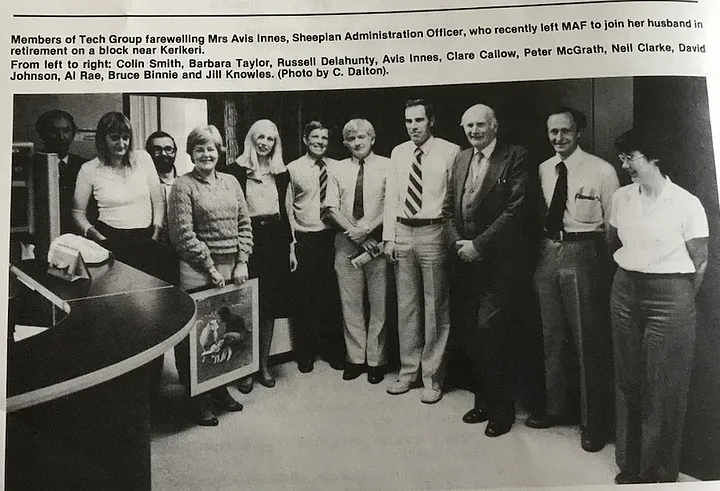
Sheeplan. While at the Station around 1973, I ended up on the Sheeplan Technical Advisory Committee which was set up to update the National Flock Recording Scheme (NFRS) that Ted Clarke left the Station to manage from Ruakura in 1967. We were a mixed bag of scientists like Neil Clarke, Prof Al Rae from Massey, Animal Husbandry Farm Advisory Officers like Clare Callow, Sheep breed reps, and our MAF Wellington staff who fed farmers’ data which they posted in, into the maw of the government computer at Trentham.
After analysis, it was then mailed back to them in time for it to be used. If the computer broke down at a critical time it was a disaster for their breeding programme. They were all wonderful folk and accepted this. The downside was that most meetings were in Wellington, on the second floor of the Public Service building where you had a clear view of the sky, the weather and planes going into the airport — or not, and hence concern whether you’d get home that night, or have to drive back, ride the overnight rattler to Frankton, or stay another night! Memories of fog, gales, Fokker Friendships bucking their way sideways on to the Wellington runway, kids screams, the smell from sick bags, the freezing Wellington terminal with corrugated unlined roof, and sparrows shitting on you, and more.
The Koro club. When MAF went commercial, everyone seemed to become a manager, and they started wearing suits and lace-up black shoes and had cars for business and private use. They were also given a credit card for business use — which could be loosely defined at times! When I moved to MAFQual I asked for a card when called to be the ‘MAF Media Man’ at the Canterbury snow crisis.
I flew from Hamilton to Wellington OK, but could not go any further because of the storm, except on a hard seat in the Westpac chopper that was heading there on rescue work. I needed a feed at the airport, and the only place open was the Koro club.
So for a few hundred bucks I joined on the spot, and flashed my card as I proudly walked in to be called ‘Sir’.
I used it for a few Wellington trips after that, till the DG, non other than Russell ‘Chainsaw’ Ballard found out, and my boss got a real rocket about how a critter of my low standing ever qualified to get through the Koro door? To be fair to the man, before he found out, I still have a very complimentary hand-written note from him, saying he’d heard me on the radio about the crisis, and how it made him feel proud to be leading MAF. Non-members could only get into the Koro club if invited as a guest by a member! (CliveD).
Exotic beef breed trials. A whole range of European cattle breeds were brought to New Zealand in the 1980s to boost beef production from the dairy herd, and the main work was driven by Dr Graham Everitt at Ruakura. We at the Station got involved in seeing what the female crossbreds would be like as beef breeding cows, which we ran with the cooperation of L&S on the Tahae block near Mangakino with manager Eric Birch. The trial went on for five years and required many cold trips by David Hall and Sally Okell in Station farm vehicles with no heaters to warm our feet or keep ice off the windscreen. The work was all finally published in about half a dozen papers. The staff at Tahae always seemed to enjoy our visits. (CliveD).
Breeds in trials. Thinking back now, we had a fair menagerie of ‘breeds’ in the various trials run on the Station over the years, all needing separate colour coded tags. The main breed was the Romney and we had 8 different groups. Then the breed comparison trial included Romney, Coopworth, Perendale, Corriedale, Merino, Cheviot and Dorset x Romney. There was the Drysdale and Tukidale carpet wool breeds, and sheep which would be classed as wild — the Raglan Romney, Hokanui and sheep from Campbell Island. We didn’t get any from Pitt Island — thankfully! (JockC).
Ram smell. In some work at the Station with teaser rams, we found that Dorset teasers were bringing ewes into season much sooner than other breeds. I remember reporting this at an Open Day and Bob Sealey, Maori Affairs farm manager from Pohara near Arapuni stayed all day at our stand. He kept telling me that it was the ram’s smell that was causing it — and wouldn’t shut up and go home! I certainly knew that the bare skin parts on the Dorset rams went bright pink, and they did have a Billy goat pong for sure. I got so fed up with Bob, that I asked Terry Knight to go to Pohara and see what was going on, and bring some stinking wool back to test Bob’s theory. Well, after Terry’s tests rubbing the wool on the noses of isolated ewes, the grease in the wool clearly carried the pheromone that stimulated ovulation. Bob had plans for the smell to be manufactured and sacks soaked in it could be hung on fences at mating. Or it put into an aerosol can and sprayed on ewes. It was too big a project for the Station to carry on with, but work had been done in Europe, and was regularly used in pigs with a ‘boar taint’ sprayed on the sow’s nose at mating to stimulate her to ovulate. Bob got no recognition for his knowledge, other than the article I wrote in the NZ Journal of Agriculture, which pleased him I think to see his photo sucking on a fag in his sheep yards at Pohara.
Footnote. Ray Armstrong married Bob’s stepdaughter Ruth, and I was invited by Bob to be the MC at their wedding — which I didn’t think was an appropriate time or place, to comment on the father of the bride’s discovery of the power of male pheromone to stimulate ovulation! (CliveD)
‘Whiskers’ McQueen. When a small sample of the Campbell Island Merinos arrived from Ruakura for their (thankfully) short stay at the Station, the event needed to be recorded and publicised which required the skills of non-other than our Ruakura veteran photographer Don ‘whiskers’ McQueen — the best in the business and noted for his close-up work. He and I were in the crush pen in the old yards looking at a classical extremely wide-horned Merino ram, and Don decided to move in for a real closeup. The ram didn’t appreciate this and saw an escape route — a narrow glimmer of light between Don’s legs which he started to enlarge first with his nose, and then by rattling his horns from side to side to make the gap wider!
Don was not delighted which his ex RAF vocab confirmed! Nobody at the Station wept when these sheep left. Roland Sumner managed them at the Station till 1990, when he says they went back to Ruakura, then to Horahora near Rotorua, then Wairaki near Taupo, then Winchmore in the South Island from where they were dispersed.
You can still read about them on the Rare Breeds Survival Trust website. Those travels show they were not popular tenants! One of the rams when at Ruakura escaped for one night among some Romney trial ewes, and there were over 20 lambs born which were clearly his. He sure wasn’t popular with the scientist involved, but the ewes must have liked him! (CliveD).
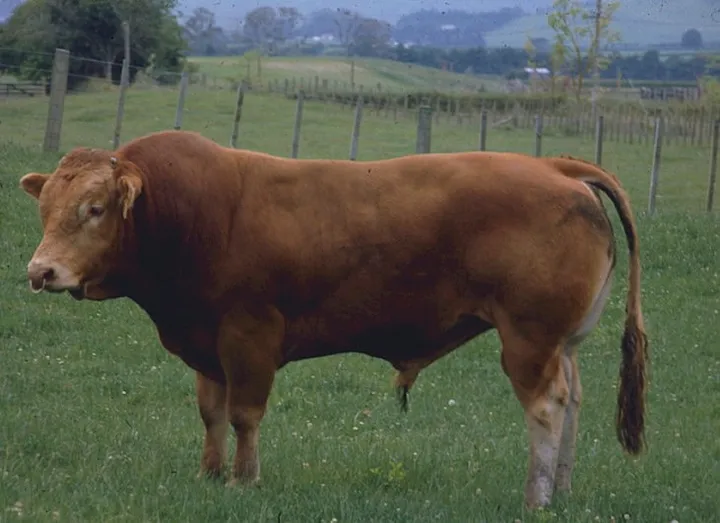
Ride-em Whiskers. Don McQueen was always up for a lark, and riding a Simmental bull imported with the European Exotic breeds trials to improve dairy beef, was too good to miss out. This photo is his second attempt! The first wasn’t a success!

Lucerne. Farmers all knew that well-grown hoggets ended up as ewes with high lifetime performance, but the problem on hard dry hill country was to grow the green feed to achieve this. Graham Hight when Director must have discovered lucerne as a key to growing this green feed, as it was a deep rooted legume and in no time we had three small paddocks behind the houses growing a crop, eventually so tall that you couldn’t see the hoggets for the first two weeks when they were put in to graze.
The situation was similar in the second year, and then interest declined and we stopped skiting about it being the ‘green gold’ farmers were pining for, as it was overtaken by weeds.
Weeds love space and light, and there was plenty provided by the growth of the lucerne each season after grazing. The need for weed control should have been obvious, as there was always a wide variety to see. Graham hadn’t realised that lucerne had to be managed like a crop, and not like a pasture. The paddocks were quickly put back into grass, and nothing was ever publicly reported about the failure of the idea. Plenty research ended like that! (CliveD).
Lucerne — more. The paddocks were sprayed out with paraquat by me with a boom sprayer on the Fergy 135. Fortunately I didn’t get sick as no mask or protective gear — maybe gloves when mixing. It was supposed to kill all pasture and weeds. Dangerous stuff, and eventually discouraged from general use. I think it is still available to registered chemical handlers with special licence. Superseded by glyphosate which has also come under fire by greenies in Europe (and elsewhere). The paddocks were rotary hoed by Neil Wood probably but I don’t remember anything about the sowing or aftermath treatment. But it sure grew!
The big problem was that the three small paddocks were out of action apart from spasmodic grazings, and it was difficult for stock movements that had to utilise these and surrounding paddocks. The Raglan hill country pasture weeds invaded, and showing resistance to selective weed spraying, the lucerne was eventually ‘run out of town’.
Many years later, in the 90s, Gavin Sheath tried something similar at Barkers with subterranean clover. Mike Dodd and Gavin selected a sub clover suited for intensive grazing in dry hill country and went through the PVR process. They failed to get a commercial partner to take it further as it was judged to have very limited market and also difficulties in seed production. The most interested firm was Lucsetti in Canterbury. It would have been ideal for the hard NI hill country. (Jock Clayton).
Round cattle yards. When the land at Yeomans was acquired, you could see a bit of history with the remains of the old farm house and bits of what had been a cowshed. There must have been a lovely garden too from the plants left behind, and I stole some for our garden! But a small set of cattle yards was badly needed to save having to take cattle all the way to the main yards by the Woolshed for handling and weighing. So it was back to Joe Mclean (who else) to find a suitable design and he came up with a set of round yards which were ideal.
Now as anybody who has done woodwork knows, it’s easy to cut wood at right angles, but cutting angles to make a circle needs a totally different set of skills. No problem for Joe! Joe Bishop was the man, and the final result was another classic including drafting race and weighing shed. The last time I passed the yards bringing back memories was with a group of old station staff having a nostalgic ramble. I was disgusted! The weighing shed was a tip of tags, Chinball harnesses and paint, and rubbish all over the floor left by some lazy bugga who needed more than a quiet word! (CliveD).
Research leftovers. Work done at research stations is like a battle field. After the conflict is over and the combatants leave, there’s always a heap of wreckage left behind that nobody worries about what it cost, and who paid for it or if it was ever used. Farmer taxpayers never knocked on our door to check if they got value for their tax money. In the age of computers, at least the Station data went to Ruakura and would be stored somewhere even if not analysed, but goodness knows where the early data ended up. I found some of Inkster’s hard-backed exercise books from his stocking rate trial in the 1960s, in the office ceiling when I had a look up there for rat damage to power cables. There was an accepted order of getting research out, starting with full reporting in refereed papers in national and international respected journals.
It could take years to get approval from scientist referees and editors before being published — and which farmers would never see or understand. But they could read reports in the NZ Journal of Agriculture which most would subscribe to. I remember once getting smacked by my scientist co-author Graham Everitt for my article coming out in the NZJA before it appeared in the Journal, as this could have cancelled official publication! This was followed by reports in the daily newspapers that had full-time farming editors like Peter Bourke on the Waikato Times and Peter Freeth on the NZ Herald. MAF also published Fact Sheets called AgLinks, and then there were papers presented at the NZ Society of Animal Production, the Ruakura, Massey and Lincoln Farmers’ Conference Proceedings which most farmers purchased, if they attended the conferences or not.
The information on the Large 6×4 Field Day boards was also photographed and printed in the back of the Ruakura Conference Proceedings. But as Roland Sumner said when he brought 6 full filing cabinets from the Station home to his woolshed, there were a lot ‘bits of paper with data on them’ in folders, that may never have seen the light of day for a very long time, or have ever got sorted or analysed. He was brave enough in recent years with some financial support from AgResearch to delve in there and analyse and publish some interesting data on feral sheep fibre. (CliveD).
Sheep to PNG. In 1974 my boss Murray Bigham was asked by the Ministry of Foreign Affairs (MFA), to go to Papua New Guinea (PNG), to look at the feasibility of establishing a sheep flock near Goroka in the Southern Highlands. This he did, and found it very similar country to New Zealand. The aim of the project was to have a nucleus flock at a government farm, and disperse surplus stock to villagers from there. The project was given the OK, and Dalgetys organised a shipment of sheep to leave Napier in May 1975. A Kiwi resident in PNG was appointed project manager, and he and three Papuans came to the Station to learn about sheep.
I was asked if I would go on the ship to PNG to feed and look after the sheep’s health, as surprisingly no veterinarian was required on board. I accepted, Ruakura’s Don McQueen came to the Station to take my mugshot, and I had a passport within a week. Murray and I and one of Ian McMillan’s huntaways (which he sold to go to PNG), travelled to Napier to train the sheep to eat lucerne/maize nuts while on the voyage, and to reject any sheep that refused to eat.
There were about 1000 sheep involved in the project with equal numbers of Corriedales, Romneys and Perendales, plus 60 rams. Vets checked sheep health before departure, especially for footrot. The Corriedales were the best sheep as they had been selected by the MAF Sheep and Wool Officer in Christchurch (Lyndsay Galloway). The Romneys were classical short legged wool-blind ex stud ewes, and the Perendales were shocking skinny rubbish of sheep. (Stuart Peterson)
PNG. Life on the ocean wave. The Danish ship ‘M.V. Ida Clausen’ arrived from Cairns, Australia and the sheep, sheep nuts and lucerne hay were loaded as deck cargo. The ship had been converted to carry livestock and was very small at only 50m in length with a draught of 2m, and max speed of 6 knots. So it was never going to be a fast trip. The crew were a captain, first mate, two engineers, a Chinese cook and four deckhands — two Kiwis and two Aussies.
The trip took 14 days from Napier to Lae, and we had 6 sheep deaths on the way due to Salmonella. But the main health problem was Pink Eye (conjunctivitis) due to the very dusty hay. We stopped feeding it as we had about 50 new cases a day, and it was a major job treating them.
The sheep took a few days to get their sea legs but settled in well. We had a major storm in the Coral Sea which lasted three days, with waves coming over the ship and water going down into the pens below deck. The hold could not be covered as the sheep would be dead within an hour, and water coming in was greater than it could escape via the vents. Three of us went into the hold several times a day and scooped up buckets of sea water and sheep shit into a dumb waiter, which when full was hauled up and the contents poured over the side. The storm lasted three days and to eat you held a plate in one hand and a spoon or fork in the other as if you put it down it took off. (Stuart Peterson).
PNG arrival. After customs check at Sumarai at the southern eastern tip of PNG, we were to head north and turn West past Trobrian Island to Lae. I was on deck early next morning and noticed we were going East quite slowly. I went up to the bridge to check with Carl the skipper about this. The first mate who took over the helm at midnight, had turned West too early into uncharted waters in an area full of reefs which could have ended the trip, and it certainly ended the first mate’s career.
When our work was completed most days we spent time on the deck drinking lots of Leopard beer and talking bullshit, and playing 500 in the mess at night.
The two Aussies played the two Kiwis for money and I played for either side if one pulled out.
We finally reached Lae and the stock were loaded onto trucks and sent to a quarantine farm at Erap in the Markham Valley. The crew and I had a final farewell party at the Motel where I was staying. Next morning I was picked up and we travelled to Erap to check the sheep which were in great condition. We arrived at Goroka and I spent a week working out at Menifo helping to get the site ready before the sheep arrived. I was mainly working with Uri Paloma, the Papuan supervisor building a set of sheep yards.
He was one of the Papuans who came out to the Station and was a very capable operator with about 10 labourers to assist. They had only shovels to dig holes and were bare footed, so the holes ended up very large so in the end we concreted all posts in. The Station was easy rolling country covered with native Kunai grass which was not suitable for sheep. Most areas had been regrassed with better species, and some of the workers were clearing new areas using slashers and building fences.
One of the Papuans who had also been to the Station was cutting grass when he stood on a Death Adder and was lucky not to be bitten. The climate was similar to Northland where winters were cool, as Goroka is about 2000m above sea level. (Stuart Peterson).
PNG Home. I flew out of Goroka to Port Moresby and stayed two nights before flying home via Brisbane. My understanding is that over several years the sheep disappeared and the project failed. The climate and terrain were in my opinion suitable for sheep farming but a major problem was tropical diseases and parasites like screw worm.
I did see a small flock of sheep called Priangans which looked very much like East Friesians and probably came over from Dutch East Indies.
It would have made more sense to have genetically improved those. Murray and I wrote up a full report, but nobody knows what happened to it, or if it had any effect, and whether our contribution had been worthwhile. It may never have got up though the MAF bureaucracy to land on a desk in MFA. (Stuart Peterson).
Neil’s bridge. Entry to the houses before what is now called Tui Lane that Dave Tuitara made, was up past the station on the left on the way to Raglan. We drove in there and then down the hill over a bridge, which with all the extra houses and traffic became very rickety and unsafe, especially for heavy vehicles. So the solution, like so many problems on the Station, was to leave the problem with Neil Wood, where he made a complete new bridge outside his workshop, decking, side rails — the lot. It was then moved over the road and dropped in by a crane — a perfect fit, sweet as! It’s now closed off. (CliveD).
Neil’s bull trailer. When Artificial Breeding (AB) was being developed first at Ruakura and then by the NZ Dairy Board at Newstead, Stan Southcombe came up with the idea of a trailer to transport bulls tethered in small paddocks to the semen collecting barn. Doug Lang was working on AB in beef cattle and he must have seen the need for such a trailer at the Station. So he got Neil Wood (who else?) to make one from Stan’s design. It was very clever, as the trailer tilted for the bull to walk on, without the need ramps or a rear door to manhandle, and once loaded, the trailer could be levelled from the tractor seat for transport. Doug’s project didn’t develop but Neil’s skills and his time involved were not wasted, as the trailer was gratefully received by Newstead staff, and it’s probably still in working order as Neil always made things to last. Wonder if they paid the Station anything for it? (CliveD).
Old Whatawhata bridge. Nobody who lived or worked at the Station could ever forget the impact the old one-way wooden bridge, crossing the Waipa river at Whatawhata village had on our lives. An initial low wooden bridge was built in 1881 to be replaced by the high wooden structure at the turn of the century to accommodate all the maritime traffic up the Waipa to cover its massive catchment. It was built of Australian Jarrah (sold to local farmers when demolished) and replaced by the new concrete one as part of the new highway construction in 1971.
Remember the rattling deck planks as you drove over it, after the frustration of waiting your turn at an end on the way to town to work, to shop, after-school sport practices, trips to doctors and hospitals, trips with mums in labour to the hospital maternity unit, dogs and cats to vets — and so much more? Ray Armstrong remembers the great Waipa flood of 26 February 1958 when the water was lapping the deck. . The water is clear blue on the photo and not like today’s brown sediment from land runoff from farming. Neil Clarke says he used to go down there to swim with the local Maori boys! You wouldn’t dare do that today! (CliveD)
Footnote. I have a photo of the bridge if you would like a copy to stick on your wall and generate a bit of nostalgia. (CliveD).

What’s that smell? Joe asked for assistance to complete a fence along part of the bush line as the contractor was behind schedule. About ten of us went to the site after lunch, and several dogs came along as well of course. We completed the Job about 4pm and got back on the truck to go home. Dogs were called and told to jump up on the truck. But there was a terrible stink and it was quickly realised that Bram’s dog ‘Bloke’ had discovered a ‘human deposit’ in the bush, and obviously thoroughly enjoyed rolling in it. Once identified, he was ejected from the truck and had to run back to the woolshed where he was tied up and subjected to a humiliating wash with the high pressure hose. Poor ‘Bloke’ had a look on his face wondering what the hell he had done wrong, after all, he thought he smelt great and assumed his mates (human and canine) would agree! (Stuart Peterson).
Helicopter heave-ho! A fence was to be built on steep terrain out the back, and as there was no access to the site for vehicles, it was decided to do a helicopter lift and drop loads at specific sites along the line. Each lift had a maximum weight and materials were to be bundled for each drop-site. The bundles to be lifted were placed in order at the bottom of Back Range 1.
The helicopter with its Perspex cockpit bubble, looked like the MASH choppers in lift off and when it came in to land. We connected the sling to the first load and away the pilot went to drop-site 1. After a couple of drops the helicopter landed, and the pilot asked if anyone would like a ride. I started to move forward but was beaten to the door by Peter Burton.
Away they went and two minutes later they were back, when a very white Peter emerged from the chopper doorway and landed on the ground. His knees had buckled and he said he thought he was going to die! I think the pilot was getting bored and decided to give his initially enthusiastic passenger a bit of a thrill! I bet Peter can still remember that! (Stuart Peterson).

Joe’s hat. Some fencing gear was being air-lifted out into the Mount paddocks overseen by Joe McLean, who in those days wore a large straw hat. As the chopper lifted off the ground with another load, Joe’s hat was sucked off by the vortex and floated several metres up with the draft from the rotors and was chewed into small bits. Joe looked up watching it go, and with his typical very dry sense of humour said to David and Ray Armstrong who was also helping, ‘ good job that man fell out of his hat eh!’ (David Hall).
Milk and papers. The two essentials in life! Our milk came from ‘the Raglan milkman’ each day Jock Clayton remembers, to replace the empties (large for milk and small for cream) put in each family pigeon hole by the road. Initially we left the money in a bottle, but as always happens, there’s sticky fingers around so we all had to move to plastic tokens bought either from the milkman or a local dairy. Our grandkids loved playing with the old milk basket and bottles, filling and emptying them with water and sand and getting soaked.
I’ve just given mine (with rust and broken plastic) to a kindy for more kids to enjoy. They sell in antique shops for $20 I saw, and Jock says they sell for more like his did if complete with bottles! The paper man who delivered the Waikato Times each day was a smart operator too, as with great accuracy he fired the papers out of his car (sometimes over the car roof) without even slowing, right into the Station gateway to be picked up on the way home — plastic wrapped on wet days. (CliveD).
The burglar. I lived in the old Superintendent’s house up the hill overlooking the office block and at night just on dark, I would grab a coffee and just stand by a big gum and look over the office block to check all was fine. Then one night at 9pm after doing the usual survey, I heard a watch beep. Now I don’t wear a watch and the watch wearer took flight for the scrub.
So I ditched my cuppa and ran to the house for my shotgun, told Shaz what happened, and she rang Neil Wood who lived across the road at No1. He let rip with his shotty as he walked up the drive, while I did the same walking down. We could hear somebody crashing through the scrub, met up with him and let off a few more shots for good measure. About a week later down at the pub, a local started chatting with us and eventually the conversation turned to local burglaries, and he asked what would happen if we ever caught one.
Neil quietly said that after we’d shot him, we’d simply chuck him down the offal hole up the back among the dead sheep, say nothing, and no baarstaard would ever find out. We didn’t report that all our shots went safely into the base of trees, and reports of pellets raining down from above must have been rumours from somewhere! The news of our antics must have escaped into the local Whatawhata community — as must the burglar! (Aaron Malthus).
Playgroup and babysitting club. When Jan and I were still living in a Station house, I estimated there were about 40 kids living in the staff houses. These ranged from pre-schoolers, to secondary school pupils. With a regular number of births, (3/year at one stage) there was an opportunity for a playgroup to be established for the under 5s. Jan Clayton and Denise Knight (ex primary school teachers) decided to start one up. With some finance from the social club, they bought some equipment and set it up in Clarke Hall which was an ideal venue for the one or two sessions per week. It thrived for a few years.
The mothers thought a babysitting club would be useful too, which would allow parents to get out for some entertainment, and each mother member would build up a credit by sitting for someone who wanted to socialize during an evening. However, no one wanted to babysit Rob and Vivienne Moore’s two boys as everyone soon found out they were shockers to look after. But it was OK for the husbands to do it to allow the Moore’s to get out occasionally. I did it once, and that was enough! (JockC).
Farming neighbours. It seems to be a universal rule in farming, that neighbours next to Research Stations or Demonstration Farms were never great supporters of what went on at these places. Indeed, from my UK experience, farming neighbours always looked forward to hearing some bad news, or seeing something that they could criticise to their mates by scientists who knew nothing about farming, as being stupid practice or a complete waste of public money.
You had to travel 20–30 miles away before farmers were interested in the work, and would attend conferences and field days. Ruakura was a classical example, and so were our Station open days with farmers travelling for great distances to get there. I can’t ever remember seeing any of the Johnstones or Moores visit us at any time, and I certainly can’t remember any of our staff visiting them to discuss farming matters. But Michael Hope was the exception for a number of reasons, as he supplied us with Cheviot ewes and rams, and Perendale rams, and he joined the Perendale Genetic Development group (PGD) that I was involved with.
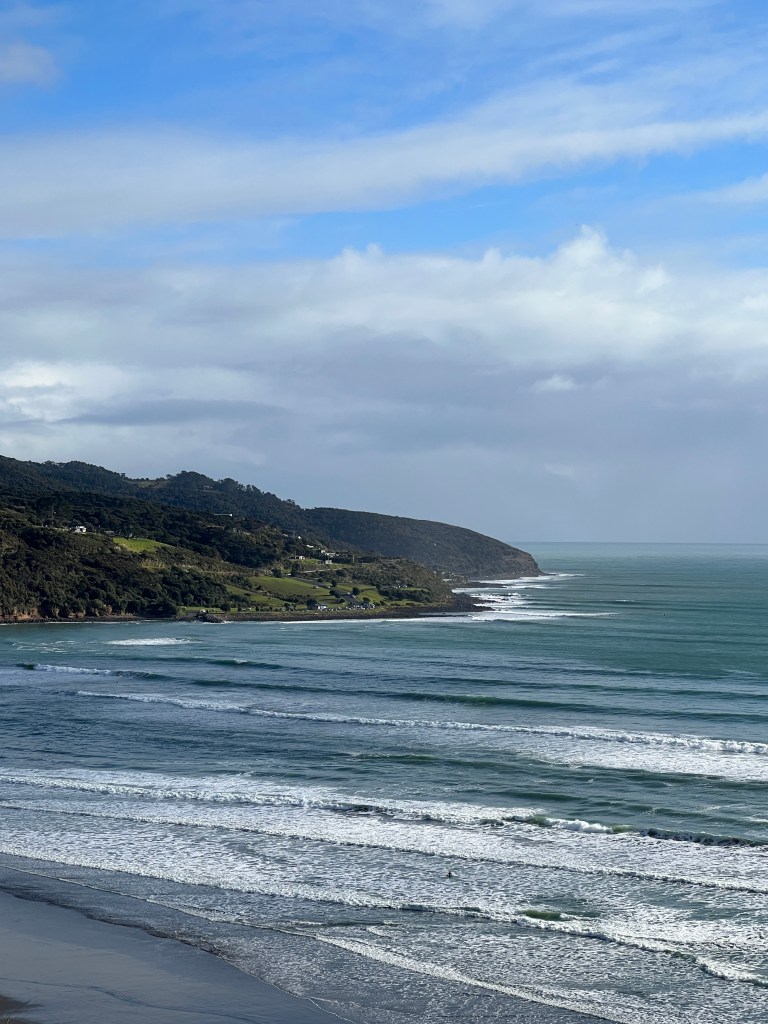
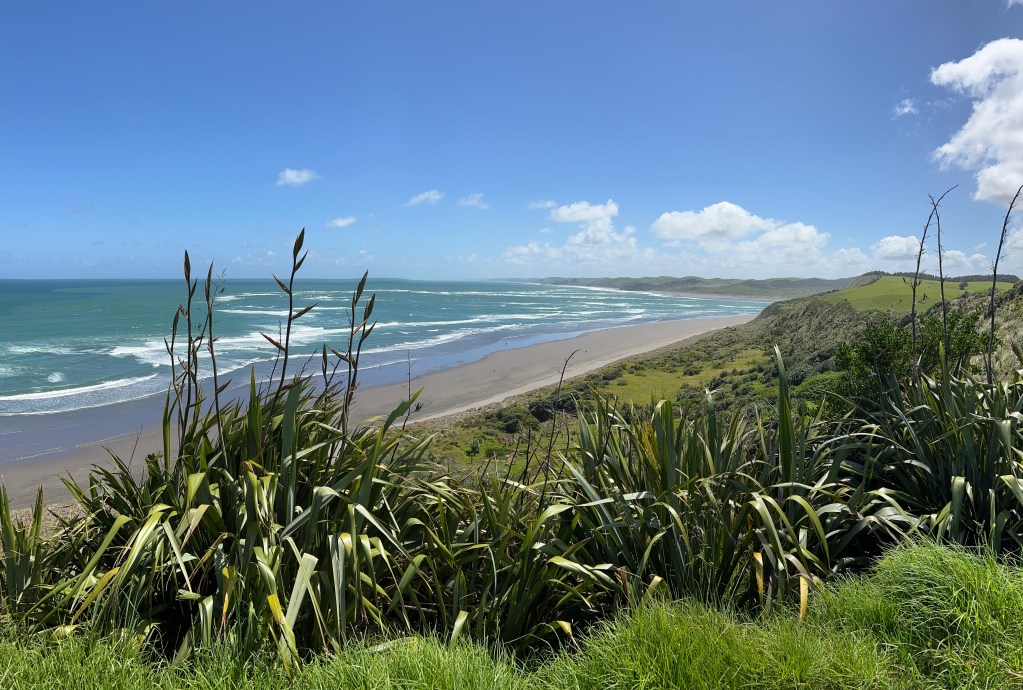
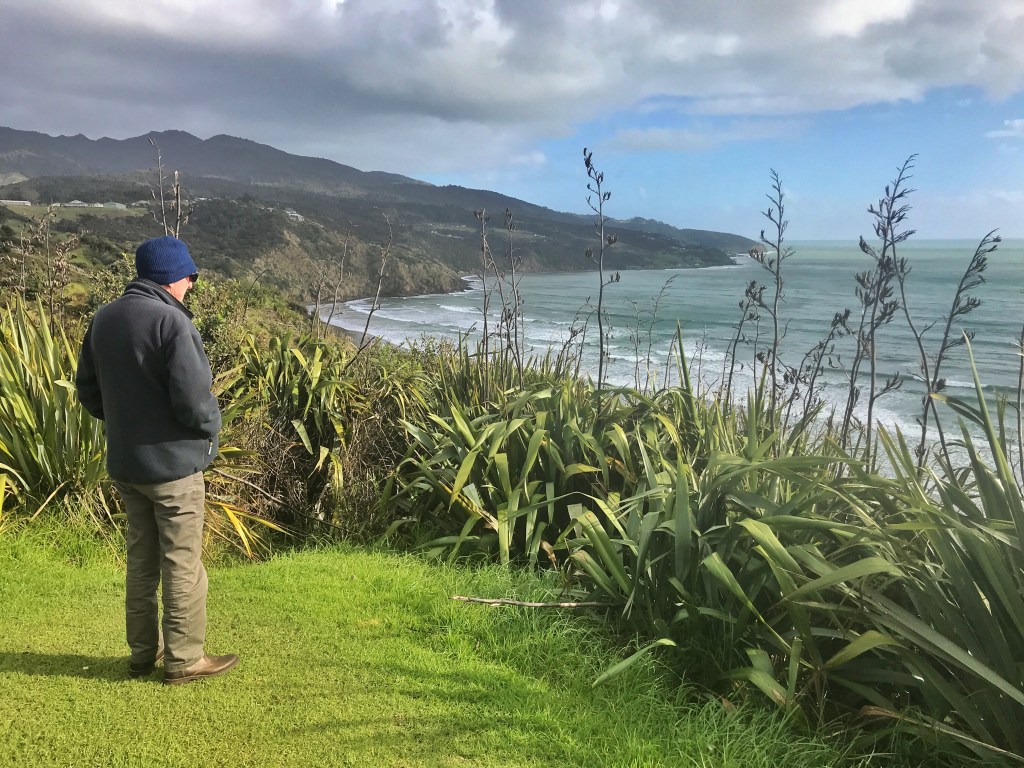

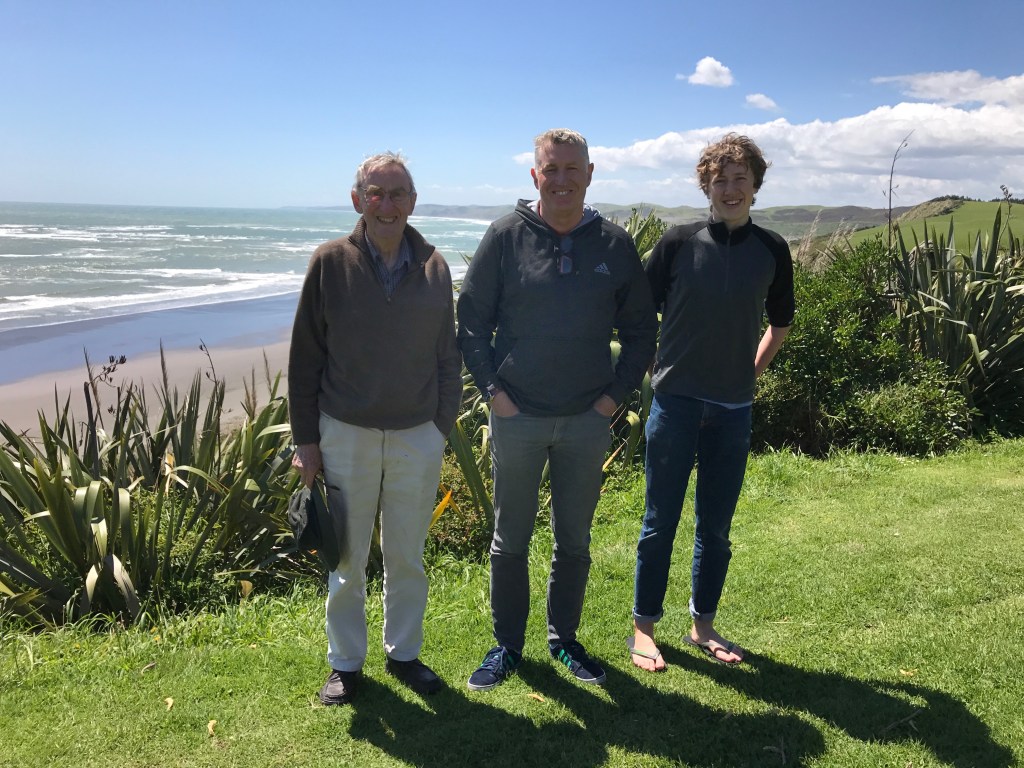
I greatly valued his experience and advice, and every time I visit Raglan now, my first stop is to the ‘Michael Hope Lookout’ where his ashes were spread to commemorate his contribution to developing the Wainui reserve. On the way down the deviation to Raglan, I look at the hills now covered in naturally-regenerated and planted Kanuka and Manuka that Michael as a young man, and his parents coming up from the Marlborough Sounds worked on so hard to clear to make a farm. And son Geoff Hope’s fenced memorial on the hill top where his ashes are spread. And I wonder what they all would think about their farm today.(CliveD).
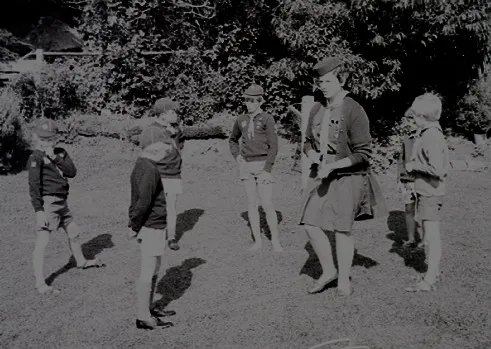
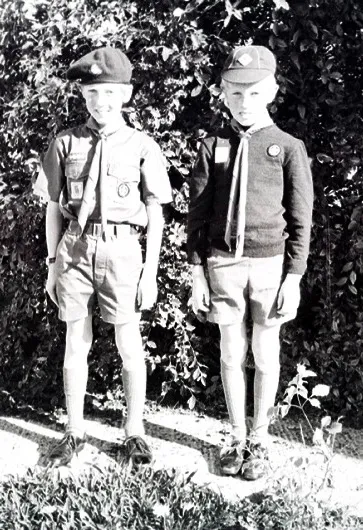
Lone cubs. Joan Hope did a great job organising a cub pack for kids who lived far apart on farms, and who could benefit from social contact other than at school, and be taught the lessons and skills pioneered by the great Baden Powell. Our two lads joined, and there were kids from Raglan and of course some of the four Hope boys. You could see how proud they were getting into their uniforms, before I dropped them off over the deviation at Hope’s farm. There was a failed attempt to keep them going into a Scout movement, but son Paul remembers this fell apart for lack of leadership. I remember Olive once bringing him home from a camp on Old Mountain Road (without a supervisor) where one of them had a .22 rifle which she rightly saw as a tragedy waiting to happen. (CliveD).
Hope’s chickens. Michael and some of the Hope boys (I think mainly Duncan) set up a broiler chicken business, with about four sheds which they kept going for quite a few years. Olive and I and the kids used to love going over as often a few chickens were kept on, or had maybe escaped the 6-week-old collection, and they grew to an enormous size because of their genetics for rapid growth that didn’t stop at 6 weeks. The impressive thing was their massive thick legs.
I can’t remember how we euthanised them, but we got the feathers off in boiling water. When dressed out they were almost the size of a full grown turkey. But the most exciting part was slowly feeding the guts into the creek to see the massive pet eels come along for dinner. They were monsters and the kids were very careful they didn’t fall in! (CliveD).
Box up. It was late-ish afternoon on my evening Polytech class day, chemistry and English as I recall, when I had to bring in a mob of sheep from below the airstrip to the yards. Easy enough — just through a couple of paddocks and job done. However, one of those paddocks already had another mob in it, so as they were well away down by the creek, I thought my dog Sue (remember close friend of Lang’s Ted and mother of Dalton’s Bob) I could keep our mob up high. Piece of cake! But the first one through the gate soon disproved my theory. A box-up ensued for sure. Bugga! And that buggad my Polytech class too. OK, I’d maybe been been a bit lax, but I made plans to fix it first thing the next morning. She’ll be right I thought! Next morning I got there early to find that my work colleagues had already got it sorted. There were two mobs again, with much embarrassing silence — nobody said anything. I would now like to take this opportunity to apologise, and thank those (you’ll know who you are), who got things, and me sorted. Thanks again. (Graham Derrick)
Slides. Colour transparency film was the only colour film available in our days at the Station, and there wouldn’t be many of us now without a heap of slides in small yellow boxes wondering what to do with them. They were exciting times, sending off the exposed 24 or 36-shot film to Kodak in the supplied envelope, and then waiting for the slides to come back in their yellow boxes to see the results. For those who wangled a trip to an Australian conference and associated tour, there was a nasty hazard waiting at the airport — the baggage Xray machine, which could kill all your photos. But you could buy a lead bag for protection, or better still carry them in your hand luggage and avoid the machine. I remember the MAF Regional Farm Advisor in Hamilton (no less) returning from a fact-finding visit to Europe with his exposed colour films to be developed at home, who forgot about the airport problem, and when he opened his 11 yellow boxes from Kodak — they were all black! His talks to the staff about his trip were not illustrated! (CliveD)
Hot skip. In our time at the Station and before concern over recycling, there wasn’t a fancy truck that went around the houses picking up our household rubbish. In fact rubbish initially wasn’t a problem with so few houses, so it was just thrown into a heap in the paddock alongside the creek beside the old bridge.. Most of us had vege gardens and a compost bin for kitchen waste, or had chooks and ducks, and cats and dogs as waste disposers. Newspapers were used to light the fires, and plastic waste was yet to become a problem. Jock remembers that when house numbers started to increase, rubbish was then dumped down a steep bank into the Plantation along the track to the airstrip, but with even more houses things had to change. So a large skip was hired and placed across the main road from the Station near the hay barn, and was collected by ‘Waste Management’ when full. Terry Knight remembers Rob Moore playing an important part in emptying it, by regularly throwing his hot fire ashes in among the dry flammable waste. Rob was never around to put the fire out, or to repaint the skip for the company, or pay for the damage! (CliveD).
The Ruakura Ball. This was a special annual black-tie event that we Station folk used to attend to show the flag, and it certainly was a memorable event. I think my 15 guinea evening suit ended up a Fraser High School concert, never to be seen again thankfully! (CliveD).
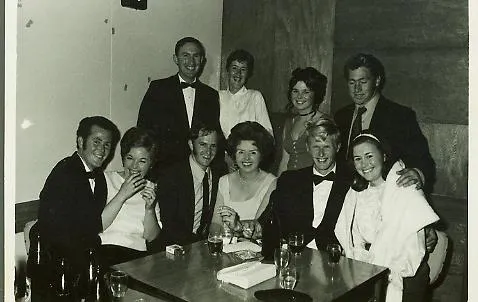
Loving memories. Looking back, as the Station was staffed by so many young vibrant folk, many of whom first were residents in the Homestead, it’s not surprising that many romantic liaisons took place over the years. But what’s so wonderful now (in our latter years), is to see how the families of these Station liaisons have multiplied, grown up and grown away, to face what is a very different future world than that of their parents and grandparents.
David & Denise (Verry) Hall
Ray & Ruth (Sealey) Armstrong
Jock & Jan (Munro) Clayton
Peter & Keitha (Curtis-Taylor) Burton
Murray & Sally (Okell) Peat
John & Chris (Wilson) Lane
Trevor & Sharon (Knight) Smyth
Gowan & Sue (Beaufoy) Rowe
Dave & Lynn (Stephenson) Saunders
Stuart & Diane (?) Blaich
Murray & Sheryll (Legget) Pearce
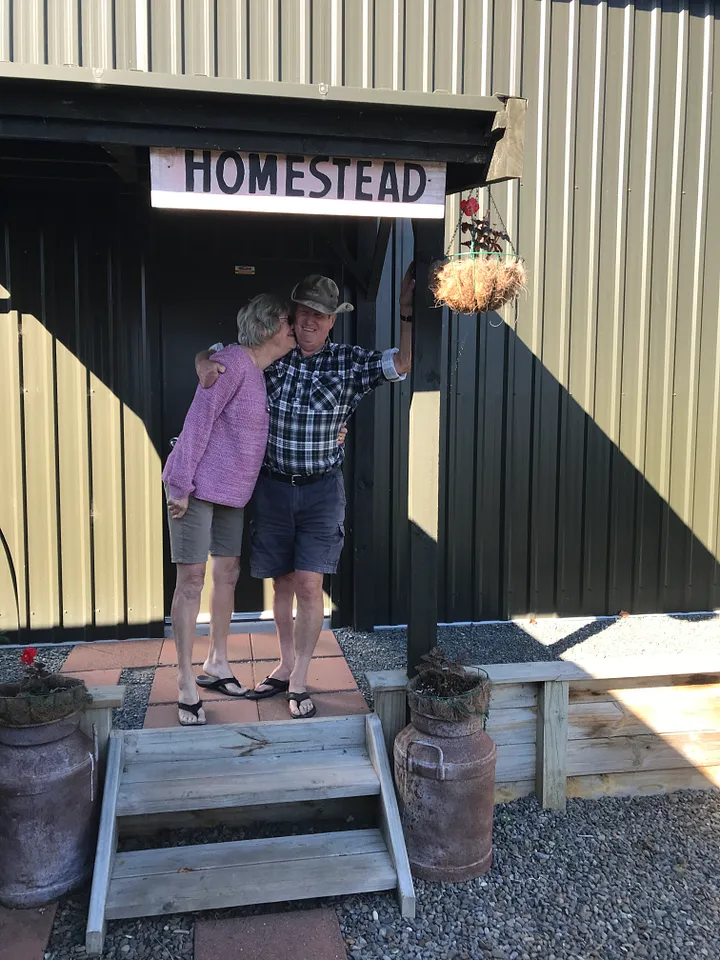
Joe McLean. There are not enough adjectives in the English or Maori dictionary to describe Joe McLean’s contribution to the Station, from the day he started fencing with his father, to becoming manager and ‘man of all trades’ for at least 40 years of loyal service to the Station and scores of staff who all viewed him with enormous respect as colleague and friend. His wife Molly and all the McLean family were our close friends and we were part of their whanau.
It would have to be the many sets of sheep and cattle yards that Joe designed and built with skilled assistance of Joe Bishop, Johnny Morgan, Moke McLean, Jack Jones, Neil Wood and others, which would be his most visual memorial. Peter Rattray when Director after Graham Hight’s early and tragic death, put Joe up for a government honour on two occasions to which we all contributed support, but although being invited, we learned that Joe refused any recognition. That was so typical of the man. We all loved him. He died in 2008. (Clive D).


Family update by Martin McLean. (2021) The majority of McLean family have never ventured too far from our place of upbringing, and it will always be somewhere to go to reminisce. But the McLean family were part of a bigger family who through hard work, creativity, expertise and the ‘gift of the gab’ maybe, put a 2000+ acre block on an agricultural pedestal not just nationally but internationally. I think Dad would agree that ‘WE’ meant everyone; not one family made Whatawhata Hill Country Research Station.
George retired almost 2 years ago and has been residing between Christchurch and Whatawhata.
Derek enjoys the relaxed life of Raglan after a long career in the concrete kerb and channel industry.
Wayne lives in Hamilton and runs a Post/ Stationery shop and also plays a part with Maori health within the region.
Barbara, the only family member based overseas across the Tasman is working in a ‘Shelter for the Homeless’.
Barry passed away the same year as Dad while working for Fletcher Steel in New Plymouth.
Sharon and I have our own small business ‘ InsideOutWaikato’ offering lawn mowing and house cleaning service and operating out of Hamilton.
Joanne, also residing in Hamilton, is Chief Executive Criminal Cases in the Review Commission.
Leonie is an accountant for Livestock Improvement Corp, Newstead.
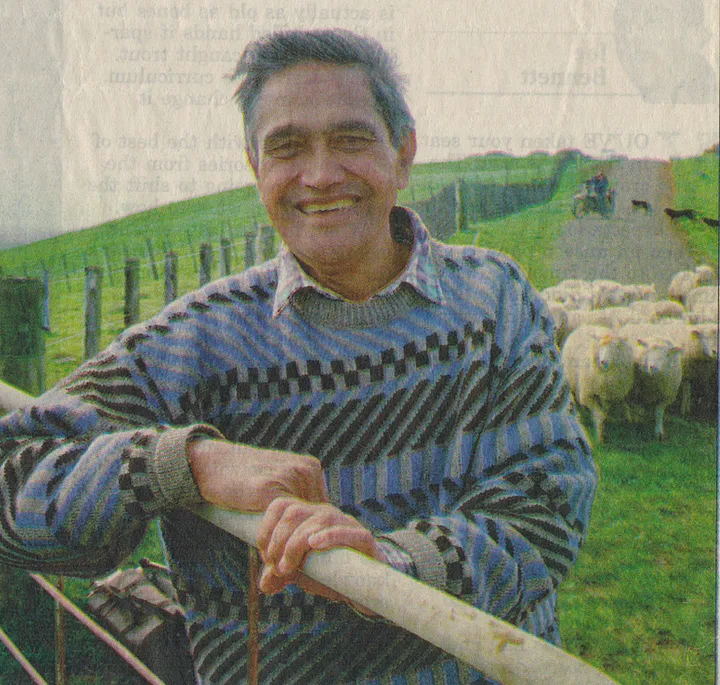
My best Station memory. It was the use of explosives by Jackie Jones. I assisted him one day when somebody had kindly pushed a dead cow over the bank into the bush not far from the airstrip. We clambered down, set the Gelli under the carcass and lit the wick. Jackie was not the fastest man on two legs back up the slope and he said to me — ‘We got 60 seconds to get out’! before we bolted up the bank, and making it to the top was a relief for sure.
Then we saw someone coming up the road on their motor bike thinking they’d get spattered with lumps of dead cow as there was no time to warn them! Fortunately the end result was no injury to anyone and the cow neatly disposed of. Jackie was a master of the art of cow disposal, and I was always pleased to see him in action.
An Ode to Joe McLean
By Clive Dalton
The fence is down
The creek is blocked
The water’s all aflow,
We’re heading for a balls-up
If we can’t find blardy Joe.
The rails are on
The posts are in
But the concrete’s drying slow,
Jock’s bringing in the blardy cows
For God’s sake send for Joe.
The shearing’s due
The shed’s not ready
The Min. of Works are slow,
We’ll never finish it ourselves
Just leave the job to Joe.
The track has gone
The hillside’s cracked
Any minute she could go,
We’ll lose the whole damn’d paddock
We’d better send for Joe.
Jack’s cut the pipe
The water’s brown
The nappies ‘ill never clean,
Carol’s talked to Rangi
And she’s after Joe McLean.
A bull has died
He’s in the creek
He’s poisoning the domestic flow,
Jack’s blown him out with jelly
Who showed him — it was Joe.
The weather’s right
The fern’s been lit
Back Range is all aglow,
Oh shit — the fire’s in the bush
Jeeesus — send for Joe.
Ruakura’s phoned
They’re seeking blood
The requisition’s not been seen,
They’re asking who approved the job
We all said — Joe McLean.
For all of us
Who spent time here
There’s one thing we all know,
That we owe a massive vote of thanks
To our idol we call JOE!
And when that day
St Peter calls
Cos’ his gorse has started to grow,
He’ll open up the pearly gates
And say — Come in mate, you must be Joe!
Congratulations if you got this far! That’s it for these first 4 parts.
Thanks
To everyone for their memories.
To Jock Clayton for his long-term memories and guidance.
To my son Mark (the wee laddie on the back cover of the printed book) for designing the cover.
Clive D
