
Betty Farrelly’s 1986 book (Farrelly, Elizabeth J. Whatawhata Hill Country Research Station — An historical Review 1949–1986, including early farming in the Waikato and formation and activities of the Department of Agriculture, (No ISBN number) is the main source of the Whatawhata Hill Country Station history, and much more. The photos in particular bring back great memories.
So why these words?
Every time those of us who are left from the Station staff from around the 1970–80 period and have kept in touch by chatting on the phone or by email, inevitably end up asking three questions:
Do you remember so-and-so?
Are they still alive?
Do you remember when …………..?
These questions are important, because memories are some of the greatest things we have in life, especially in our latter years when we still have our ‘marbles’, and can remember in great detail what happened years ago, but often not what day of the week it is. And of course good yarns grow with the telling!
The following tales spread across 4 medium posts, are not written in any particular order, and no doubt they’ll still trigger more memories of people, animals and events in our time at the Station. Many thanks to those who sent me material for the printed version which won’t be updated. New material will be added to this on-line version. We’d all agree that the exercise has been a lot of fun!
Let the Editor clive.daltonnz@gmail.com know if you have any new material or photos.
Introduction
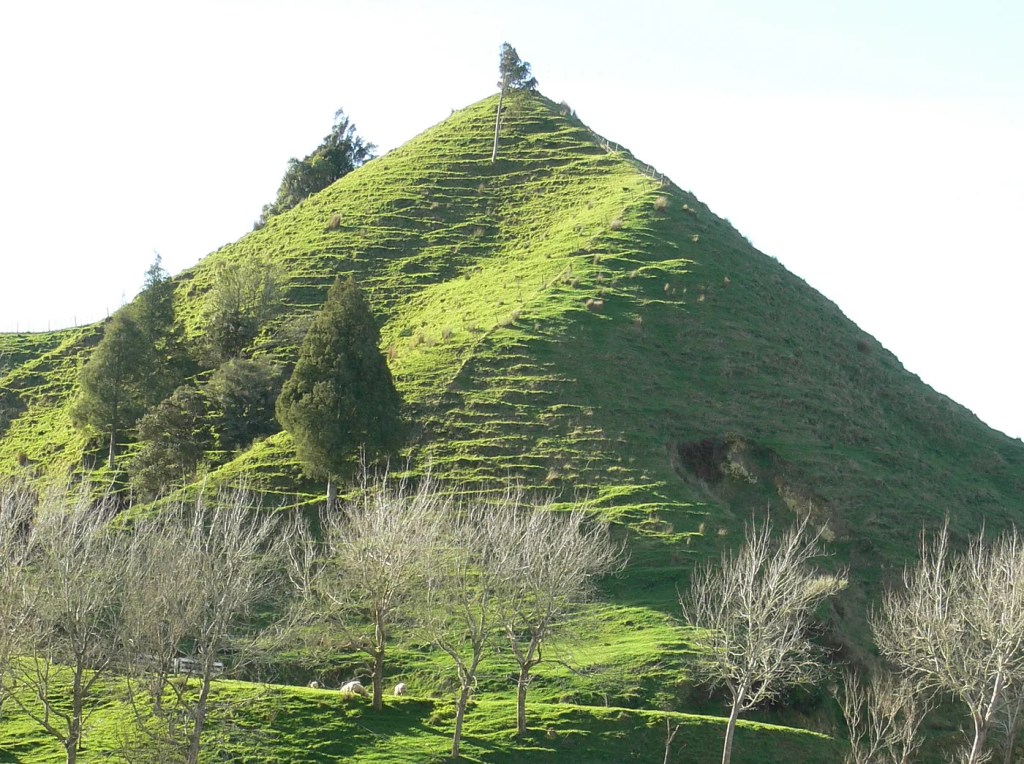
The Whatawhata Hill Country Research Station was 30km west of Hamilton, and approximately 45 minute’s drive from the Ruakura Agricultural Research Centre in Hamilton. ‘Whatawhata’ in Maori can be translated as ‘elevated support or elevated food store’. In 1949, CP McMeekan, Director of the MAF Ruakura Animal Research Station, purchased 538ha from the Egan family to use for hill country research as two thirds of New Zealand is hill country.
He appointed E.A.(Ted) Clarke as the first Superintendent of what was then called the Ruakura Hill Station, which later became known as the ‘Whatawhata Hill Country Research Station’. It is typical Raglan summer-dry hill country, mainly Maeroa ash soil type with steep and undulating land ranging up to 375m above sea level.
Over the years, the Station grew to 809 ha with 101ha in bush and 708 ha in pasture, but by 2016, after it had been handed over as part of the Tainui Settlement in 1995, the Station had 350ha of planted Radiata pines, with 85 ha in native bush. It started to be reduced in size in 1992 when MAF became a Crown Research Institute (CRI), and when Research work at the Station had to operate under strict commercial principles. As a result, research soon closed after that, and the land still in pasture was leased by Tainui to a private operator.
In 2021 Dr Clive Dalton set out to collate and edit the many stories from MAF staff who worked at the Research Station:
Ray Armstrong (1968–1972)
Neil Clarke (1949–1956)
Jock Clayton (1963–2000)
Clive Dalton (1968–1979)
Graham Derrick (1967–1969)
Peter & Carol Evans (1974–2000)
David Hall (1968–1993)
Terry Knight (1974–1984)
John & Chris Lane (1970–1977)
Doug Lang (1965–1972)
Aaron Malthus (1988- 2000)
Martin McLean (1980–1995)
Sally Okell (Peat) (1974–1977)
Stuart Peterson (1967–1976)
Roland Sumner (1969–1972/1977–1997)
Bram Uljee (1965–1969)
Barry Wylde, Ruakura(1985–1994)
But what’s their blardy surname? One day my records technician Sally Okell (now Peat after marrying technician Murray Peat) and I decided to make a list of the names of all the technicians who had been at the Station in our time. We went really well with their first names and nicknames, but then we ran into big trouble with their surnames. It was so frustrating as we remembered where they came from, who they had been chasing and their degree of success, and their confrontations with Ma Smith the housekeeper/cook at the Homestead, and so much more. Incredible detail, but what were their blardy surnames? But what was amazing was that we had ‘instant recall’ of all their dogs’ names, and endless details about their canine antics! I helped Betty Farrelly list the names of memorable Station dogs which appear in her book. (CliveD).
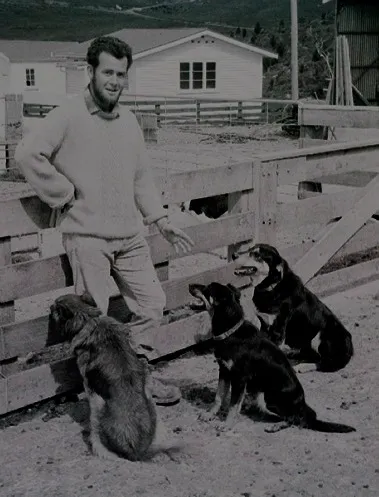
An English gentleman. David Hall who was my technician arriving just before me in February 1968 told me that cook/housekeeper Ma Smith had called for attention at the dinner table one day, to inform the residents that ‘An English Gentleman’ would be joining the staff for lunch till his house was finished on the Station. So ‘you lot had better clean up your language and your table manners’! Well that ‘English Gentleman’ noticed no changes, and indeed learned a lot of things that remained useful for his next 11 years at the Station. (CliveD).
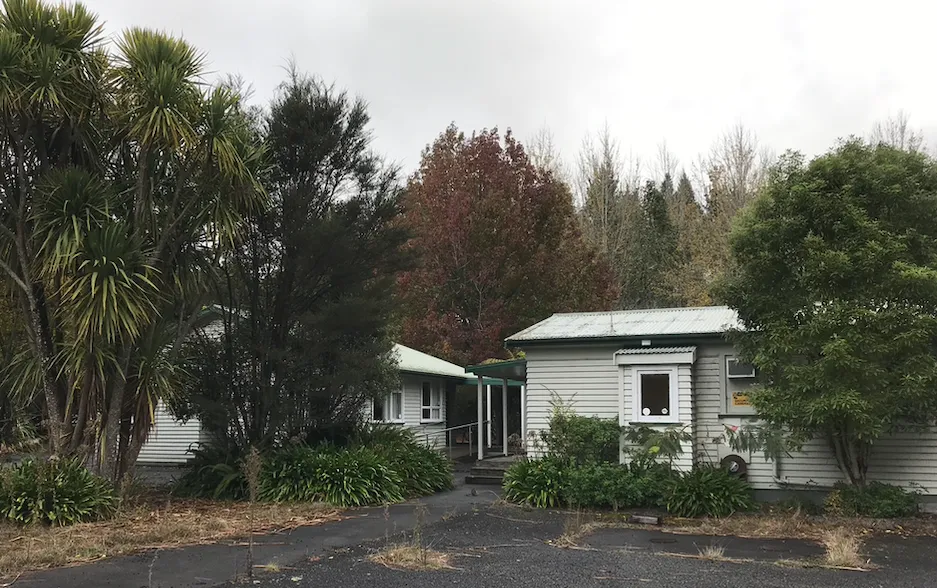
Ma Smith. Linda or ‘Ma Smith’ as she was affectionately known, was no small lady usually wearing a floral apron, and was always neat and tidy in appearance. She took a real interest in those occupying the mens’ and womens’ quarters at the Hostel/Homestead, and although not judgemental, she was a shrewd judge of character. The meals were always good and varied, and of course she had the usual daily cook’s dilemma of ‘who’s in for tea tonight’ as some had other private appointments! I remember her down-to-earth character coming to the fore one day when a couple of Jehovah Witness folk came to the door while we were having lunch. She quickly came to the point saying — ‘Look its a poor show when you have to barter your religion door-to-door like a pound of sausage’. We all cracked up over that as they didn’t linger! (John Lane).
What’s on in town? Ma Smith saved my bacon one Friday night after tea when I wanted to check the newspaper for town entertainment. Trouble was, Scientist (rudely nicknamed Dizzy or ‘Gluefoot’) Des Wyman, was reading it and was unresponsive to my request to hand over the entertainment section. I waited five minutes, and then in a fit of childish pique I crept up on all fours and lit the bottom corner with my cigarette lighter. Des was unmoved, and as the flames grew higher he remained the stoic English gentleman that he was. He kept reading till he was left clutching two handfuls of smouldering newsprint. To my horror Ma Smith came in and pointed to a large black patch on the ceiling.
Result was that I had to clean the whole ceiling, but she kept quiet about the incident and never mentioned it to the maintenance men who would have told store man (Squeaky) Trevor Gibson, who would have loved to have told Director Graham Hight. And I would have been a gone burger. Not sure what happened to Ma Smith after she retired, but all those who knew her would remember her fondly for her good humour, old fashioned values and pride in her work. Her son Wally ran the mobile butcher’s business in the Waikato until he retired, but the business still carries on today under his name. (John Lane).
Life in the hostel/homestead. Living in the hostel was frequently a lot of fun. I remember the time when Ma Smith was chatting to Stuart Blaich in the kitchen and John Lane (ever the prankster) saw his opportunity. He was able to quietly sneak in behind Ma and tie her apron strings through the handle of the cutlery drawer. He then moved back in front of her to give her a bit of cheek to which she reacted by quickly stepping forward to smack John around the ear with her tea towel The cutlery drawer followed her out of its runners, spilling the contents over the floor! John was not be be seen! (David Hall).
Whata-whata-what? I met Neil Clarke when he was doing his Ph.D. in Edinburgh breeding mice like in my research at Leeds University was, so knowing he was a Kiwi, he was the obvious man to ask about a place called the ‘Whatawhata Hill Country Research Station’ where I had been offered a job. Little did I know he’d been brought up there! Neil took great care to explain how to pronounce the critical ‘WH’ part of the name to produce a sound that he described was half way between a ‘W’ and an ‘F’ — so it came out with a gentle outward breath, if you wanted to get it right. I’ve been careful ever since arrival in 1968, but still struggle to hit the right note. But what is really agonising to hear, are people who are ex-MAF and ex-AgResearch who should know better, pronouncing the word ‘Fotafota’, ‘Fatafata’, ‘Fartafarta’, ‘Wotawota’, ‘Watawata’ — and a whole range of other verbal nasties. Fluent Te Reo speakers must cringe! (CliveD).
Private bag. Before we left UK and first saw the address of the Station, we couldn’t imagine what a ‘private bag’ was. But it all became clear when we saw the locked green bag arrive at the Station gate in the morning, dropped off by the Raglan bus that picked it up from the Post Office at Whatawhata village. Anyone on the staff passing or seeing the bag arrive took it into the office, unlocked the leather strap around the neck, and sorted it into each family’s pigeon hole. If you had outgoing mail, you put it in the bag that stayed by the pigeon holes, and somebody would lock it again and take it to the gate to hang on a hook for the afternoon bus from Raglan to collect, and dropped off again at Whatawhata. In those days, it only took 4 days for an aerogram to get to our family in UK. Now it takes a letter two weeks. (CliveD).
Superintendent. I first met Gordon Edgar at Ruakura when I finished at Massey College (in those days). I had bunked down at Whatawhata as I knew Ian Inkster and John Hutton from Massey days, and was keen to see the renowned hill country headquarters, not remotely thinking of the part this place would have on my future. I headed off overseas and landed in San Francisco then hitch-hiked across the US calling in at the various prominent Universities that had come to my notice during lecture days. Iowa (where Al Rae was) and Cornell were two of them.
After doing some voluntary work with Bill Hansel in the reproduction group at Cornell, he suggested I apply for a scholarship. To my utter surprise it was granted, and I spent two enjoyable years there. Gordon and family suddenly appeared and spent 6 months there too, and I was their full-time baby sitter. Some 20 years later, when things were going sour in my job in northern Western Australia, Gordon said he had a job vacancy at Watty Whittlestone’s lab at Ruakura and did I want it? Yup, and that meant coming back to New Zealand with Bev, and we began gathering our mainly adopted family. We stayed in Henry Bishop’s house for the first three months at Ruakura and then rented one of the farm-houses. I did some work at Whatawhata and enjoyed the company and the relaxed atmosphere, but before I could gather my wits and thoughts, Gordon called me to his office and shoe-horned me into Ted Clarke’s job of Superintendent job at the Station. So I decided to up-sticks and take it! (Doug Lang).
Footnote: Watty was a world renowned dairy scientist who improved the milking machine, and also developed the human milk expresser. (CliveD)
Getting stuck in. I had only one aim when I returned to Ruakura, and that was to get stuck into some useful research, to catch up on lost time due to disorganisation of the programme that I worked on in Australia. The thought of ‘science administration’ was not on my list, but working around the Ruakura mothership started to concern me, as I could see there was a hell of a lot of competition for money and resources in there, and I was clinging on at the bottom of the list. So I punted hard for Whatawhata as I had seen enough that encouraged me to give it a go.
As to administration, well ‘learn as you go’ was my mantra, and my hero was the farm manager Joe McLean. He was a walking gold nugget of information, and along with help from all staff we survived. As I gained confidence and started to see some of the problems that were holding us back, I made a determination to resolve some of them. I felt we certainly needed a boost in office resources for a start. Good as it was to be working close to the sheep and their odour, actually sharing the shed with them was too much. A new woolshed was certainly needed, and with it a more central positioning of it on the farm made sense.
So that was Target No1. Our staff numbers were increasing and with greater international interest in our programmes, an upgrade was certainly needed. ‘Sorry no money’ was always the first expected response. Two more goes and a yes — but only a small unit in two years time. Then another go, and it was brought forward a year. We had planned the area and the MOW came forth. Luckily I knew their boss and I made an arrangement for him to split the plan, and build two ends of a woolshed with a 20ft gap. I had been accumulating some funds and bought in the required amount of material to fill the hole with Joe’s help! (Doug Lang).
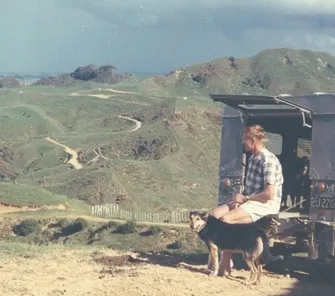
Our own rotten rock. I was lucky as when I moved to the Station, the sheep and cattle industry were on a bit of a roll and there was a general demand and interest in research, and money was not too hard to get for new or upgraded facilities. Joe and Graham Hight in particular kept my head above water, as I paddled my way round the system. The need to seek guidance from Ruakura was initially a pain and slowed everything down. But I quickly started to see a few alternative ways of doing things, and with Joe’s skills we started to come up to speed.
Keeping to budget was a moving target and after the first year I learned that Head Office tended to have a surplus towards the end of each financial year. The trick was to have projects that could absorb this excess cash immediately. I punted for the first lot by having Dave Tuatara grade up a large amount of tracks and make new ones, and metalling as much as we could, hauling it in from Ngaruawahia pits by Hartstone’s transport of Raglan. It was a blardy long way to haul the stuff but it gave us better mobility around the station. I did this trick for two years, then one day as I was driving around with Joe and noted a bare rubble spot over the ridge from the woolshed, So I said to Joe — ‘let’s get Dave over to see if there is a seam there of rotten rock we could use’. There was plenty, and it wasn’t too long before we had our own supply that fitted in nicely with tracking and roading on the newly purchased Barker’s block. But I kept the item of buying rock in the budget from then on without any question from Head Office, as they understood it was an essential item for the Station. Little did they know about our own resource. The money saved gave us a nice little slush fund that I could use on other more important things! (Doug Lang).
Don’t look down! It was a great contract for Hartstone’s company boss and father Wes, and his two sons Doug and Tom to cart the rotten rock to the Station from Ngaruawahia. One day Wes drove up the track instead of his father, so he was on the inside, providing a great opportunity for Doug on the outside to take in the wide vista of the deviation hills and Raglan road, which he’d never had time or dare do before.
But he must have realised for the first time what was directly over the edge of the track, and how close the truck wheels got to it. When he got to the top yards, apparently it was noted that he was not looking too good, and probably needed a change of underwear too! Driving down, although you are on the edge side, you are so busy watching the track side wall, that you don’t notice the drop. (Bram Uljee).
Dave Tuatara. He should have been knighted for his skills and contribution to Raglan hill country — and for his sense of humour. I was going down the new unsealed bit of road one day from our new house to the main highway where Dave had dug a trench across, and was delicately nudging a large culvert pipe into it — a gentle nudge here and a gentle nudge there. Then suddenly the pipe rolled perfectly into the trench. Dave leapt up off his seat, stood bolt upright for a few seconds, lifted his hat high in the air in salute, clamped it back on again and sat down! I nearly fell into the drain laughing. (CliveD).
Joey wanted vision. When you drive past the Station gate on the way to Raglan, on the left you’ll see the entrance to the houses. I was passing one day when Dave Tuatara was working on the former very small entrance that lasted us for years. I said to Dave you could get a blardy battle ship through the hole he had just made — another work of his art. His reply was — ‘Joey ask me give him plenty vision, so I give him vision’! He sure had, as it was a lethal bit of road to come out on to, and it left another permanent memorial to the wonderful gentleman. I remember him and what he gave Joey every time I drive past! (CliveD).
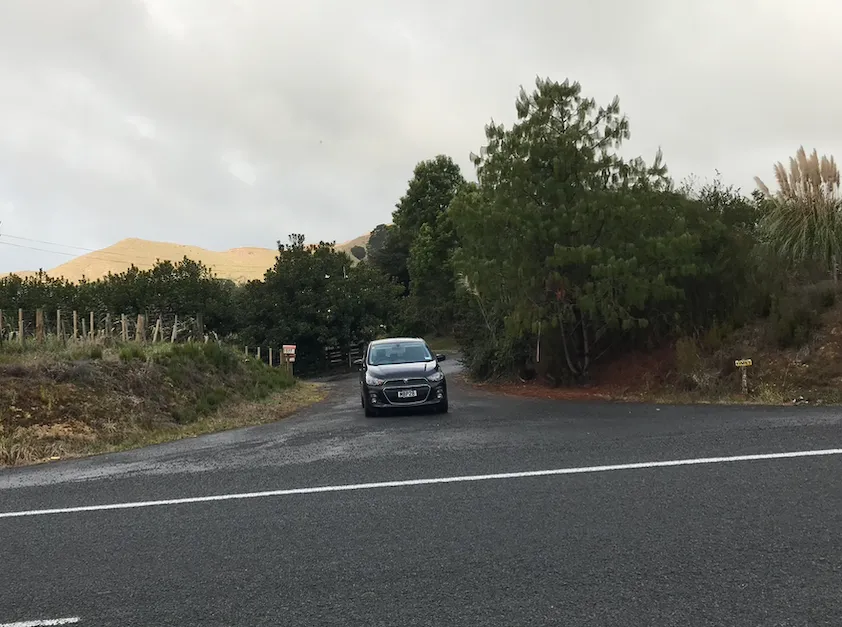
BOOM! WTF? I was in the sheep yards one day with our team when the air was rent with an almighty explosion and rocks landed in the yards beside us, one as big as a rugby ball and the rest tennis ball size. A team doing laps in the woolshed apparently nearly shat themselves when missiles hit the roof, and even Stuart Peterson releasing young pine trees in the Cliffs paddock said his team got a shower of stones too.
We eventually found out that our staff stalwarts, ex-army Jack Beaumont and Jackie Jones were removing some rocks to clear an access way along the back of the rock outcrop with their favourite tool- TNT! No need to warn anybody of course! Just light the blardy fuse and stand well back! (CliveD).
The lap cradle. During my days working in Armidale, NSW with Don Lamond on sheep fertility and synchronised mating, which was all the rage at the time, we decided to try and stream-line ovary examination with quick-fire laparotamies. We tranquilised sheep and hung them briefly by their hind legs, did a midline incision, quickly inspected the ovaries and with two stitches closed them up and away they went. It meant we could examine large numbers quickly without too much post surgical reaction.
We had a muscle-bound technician who hung on to the patient by its back legs, but after the first 20, he put in his resignation and we headed down the pub for his farewell drink. Two or three hours later, and after being called a ‘big Wally’, he had changed his mind if I promised to work out a better system. After a scurry around I followed up some ideas garnered from the mobile shearing cradle that was being tested in Prospect CSIRO Sydney, and lo and behold, we put together a unit which worked like a charm, and was the basis of the cradles Neil Wood made for us at the Station. (Doug Lang).
Ewe flipper. Getting each ewe on to the lap cradle was rather laborious and involved 2 people to lift the ewe onto the cradle and I thought there must be a better way. So I got Neil Wood to see if he could think of how to get the ewes onto the cradles with minimal effort. Neil after some time came up with a brilliant way to flip the ewe on her back onto the cradle. All the ewe had to do, was to walk up a short ramp from the catching pen into a 3 sided crate with a hinged bottom attached to a long handle. All you did was to swing on the lever and the ewe came out sideways dropping onto the cradle just perfectly. (Bram Uljee).
More lap tricks. Neil Wood made some raised races on castors from 3/4 inch pipe frame, with a wooden slatted floor and hardboard sides. Two or three sections were pinned together leading from the catching pens out through No1 stand door. The victims were run up onto the raceway and flipped onto their backs out on the board on to the raised crate for prepping. Legs locked in clamps. The later version crates were lower to the ground and the hind legs were secured with the clamps and a bike tube was run across the brisket area, before the crate was tipped up at about 60 degrees for the operation. The sheep were slung onto the crate with one person at each end and prepped. After the lap operation and scanning were done, they were dropped into a horizontal position, wheeled over to a catching pen and the crate was tipped onto its side so the sheep could get up on to its feet. That’s why they were made low to the ground to avoid any jolting. The sheep were a bit groggy as they had had a small shot of local anaesthetic at the start. Dave Hall, Terry Knight, John Smith from Ruakura were the best operators. I think Des Whyman had a go and Rob Moore wanted to as well, but Rob was hopeless and a danger to himself, the sheep and others around him! I wonder what happened to those crates. (JockC).

Farm forestry. It wasn’t until I settled into the Station that I pushed the boat out to start some agroforestry. I had contacted Barry Walsh at the Auckland Conservancy and explained what I was thinking, and he was down the next day, breathing heavily and raring to go. I asked Stewart Peterson to set up the project and start gathering some information and after a couple of years had something to show. So I shot over to Rotorua Forest Research Institute (FRI) and got talking to my ex-mates, and offering/asking for FRI collaboration.
There were private people doing it but FRI generally ignored them; their position was growing trees, and livestock didn’t go together. Bugga off was my greeting! A month or so later, I met with Minister of Forestry Duncan McIntyre who also had Lands and Survey under his care and organised a visit with our Ruakura Research Director Lin Wallace. We rarely saw Lin at the Station and so when I had shown them around I brought them up to date with where we were at. I said to Duncan I had tried to interest FRI in a joint programme in agroforestry, but had hit a brick wall. ‘Leave it to me’ he said and within a week I had a call from Rotorua asking for a meeting to see what we were doing and could they help. The pine trees in the Cliff’s and all the hybrid poplar work was the start of the work.(Doug Lang).
Farm forestry. Other work with the FRI was some low density planting of pines which could be grazed amongst when well established, similar to trials at the FRI Tikitere research block near Lake Rotoiti. A rough little area near the back of Back Range 1 and Sunshine paddocks was set up for planting at 50, 100, and 200 trees/ha. It was difficult to get them established, as the trees were under constant attack from the feral goats which were shot or mustered for social club funds. After a couple of years, sheep could be introduced, then later on cattle in order to demonstrate some semblance of ‘two- tier’ farming. The trees were harvested after about 25 years.(Jock Clayton).
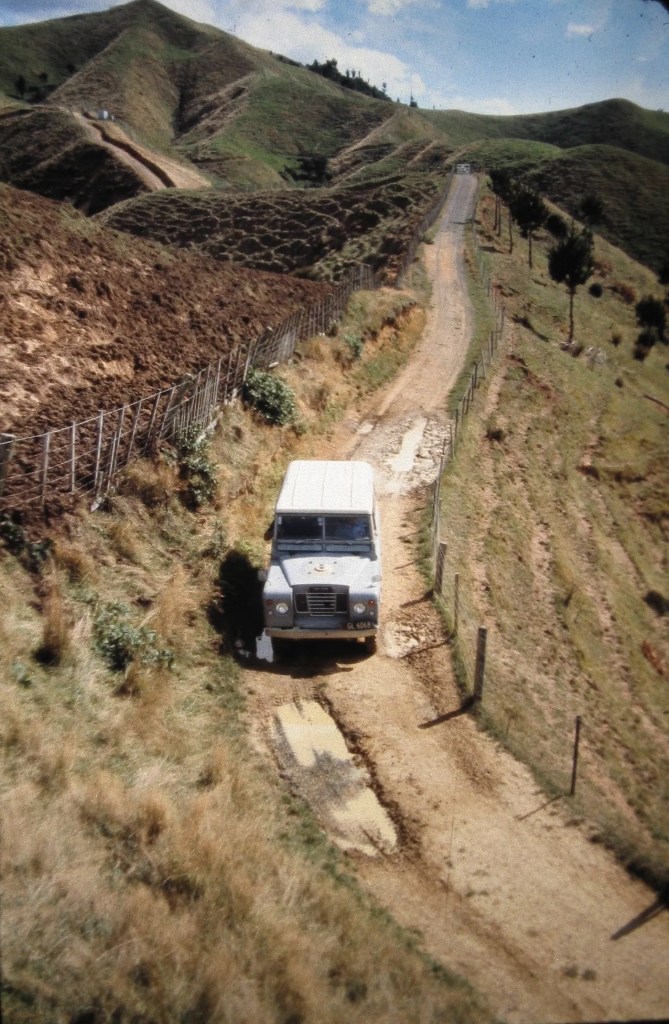
Pommie takeover. Around the time when the Dalton family arrived in 1968, there was a great anti-Pom movement in NZ, as it was said they were arriving and taking jobs and houses from Kiwis. New Zealand was short of labour so the ‘10-Pound-Pom’ programme was started, especially to recruit farm workers. Stuart Blaich and Dave Saunders came out from UK on this scheme. In no time, ‘Punch-a-Pom a day’ became a popular slogan, and there were some classic quotes which I should have written down. A favourite quip was that a ‘Good Pom’ was one going home taking two Dutchmen with him. And Poms were being brought out as deck cargo on submarines. And you could tell when a plane load of Poms had arrived as when the engines were switched off, you could still hear the whine. There were many more, some very unsavoury and hence all the more memorable and not printable.(CliveD).
Sticky tar seal. One day the county roading folk decided to reseal the stretch of road between Johnstone’s sheds and the entrance to our Station houses. But there was a quirk in the weather apparently, and some chemical in the mix didn’t evaporate so the road surface didn’t dry, allowing the seal like black porridge to stick to the tyres of our cars. Wife Olive just managed to get home but we had extra large tyres on our red VW Beetle with the added tar, so large in fact that the wheels were rubbing on the inside of the mudguard and were just managing to turn. What a job it was to scrape it all off getting covered in tar in the process. The folk going to Raglan probably never got there! (CliveD).
Off to post a letter. When Des Whyman (another imported Pom) came to work at the Station on reproductive physiology with the help of his technician Sue Rowe, all they appeared to do to those of us passing their lab door was to fill two massive chest freezers with small tubes. His mother came out from England to stay with him for a summer holiday in his rented cottage at the very bottom of the Raglan side of the deviation. Sally Peat remembers that she must have written her Christmas letters and cards, and set off up the road to find a post box — which any city Pom would expect to find of course. Never knew how far she got — Whatawhata maybe or Dinsdale!(CliveD).
The school bus. Some of the Station kids went to Whatawhata school as it was the nearest and mainly Maori, but others like ours went to Frankton where Olive eventually taught. They all got the Raglan to Hamilton service bus — Mr Pavlovich’s wooden rocket with hard wooden slatted seats, that by the time it got to town was packed solid with kids standing and even pressed up against the windscreen to give grownups their seats.
Son Nigel remembers sitting on Nancy Wilson’s knee from Whatawhata village all the way to town! But when the kids moved to intermediate school, they were transported by the Education Board school bus which picked them up at the gate in the morning. But the money ran out at Johnstone’s sheds by the roadside in the afternoon — from where they had to walk the extra distance home along the busy road. Who fixed it? Well Joe McLean of course who battled with the authorities on behalf of the kids. (CliveD).
Can you come up? I got a message from Bev Lang one day while I was in the office, to ask me to go up soon as to their house and help her as Doug was away. When I arrived, the task was to clean up wee daughter Jordan, who her elder pre-school loving brother Fergus had painted. He’d done her cheeks, forehead and nose with some old acrylic paint the young bugga must have found in the shed along with a brush.
It was off-white, so Jordan looked more than a bit anaemic! Acrylic paint dries quickly so I had to rub hard on the wee sweetie with cloths soaked in turps. I was scared about what it would do to her tender skin but she ended up OK. Fergus took great interest in the process of course while I worked away! Not sure what happened to him or her after that — but shed doors were locked in future if they contained old paint! (CliveD).
Learning the lingo. In settling in to station life, I was always grateful to Stuart Peterson for explaining the nuances on how the word bastard (pronounced baarstaard in NZ) could be acceptably used in open conversation, as it was a very unfavourable word in UK (pronounced basstad with hard a).
He explained that terms like Pommie baarstaard was almost a term of endearment, Aussie baarstaard of course was not, lucky baarstaard, unlucky baarstaard, poor baarstaard, rich baarstaard, idle baarstaard, lazy baarstaard, hard working baarstaard, stupid baarstaard, clever baarstaard, dumb baarstaard, Dutch baarstaard were all acceptable — even tested in a court of law he assured me! ‘Dirty baarstaard’ maybe not! Stuart’s linguistic advice has served me well over my five decades in Godzone, where I’ve been a very lucky baarstaard I can assure you! (CliveD).
Phone numbers. Most rural folk in the Raglan area were all on party lines, where up to a dozen folk could share the same phone line but with a different morse code ring. It took me a while to learn what was going on, when in the middle of a conversation with a farmer about buying rams, he would start saying ‘Working-Working’ ‘Working-Working’! We all had a proper individual numbers at the station, and when like us you got a new phone, you inherited a number from a previous user.
So for a while I couldn’t understand why when I picked up our phone, the voice would immediately say — ‘Gidday Frank, Jim here, 3 cows tomorrow’ and then ring off! It took me a while to find out that our phone had belonged to Frank Colgan who had the local AB run! And when we moved into town I heard that somebody in Whatawhata village had inherited our number, and they were NOT happy with all the calls they were getting and the tone of some of them! I didn’t risk finding out who they were to apologise! (CliveD).
Ruakura meat. As a so-called privilege, you could order meat from Ruakura which came from Alan Kirton’s trials, and part of the deal was to complete question sheets about such things as tenderness, aroma and flavour. You couldn’t choose what you wanted — you stated the size of the family and the parcel based on weight arrived on Trevor Gibson’s town run each Friday.
Opening the great newspaper wrapped parcel was always a surprise, and over the years we must have eaten all sorts which we were better not to know. One of the most memorable was meat from young rams which Alan claimed had great marketing potential, and had no aroma or taint. He must have had no sense of smell or taste! We must have eaten scores of old ewes too by the amount of fat in the tin after cooking and goat meat too. But the greatest enjoyers of the aroma were the swarms of brown blowflies that arrived in the kitchen when cooking — probably from as far away as Raglan if not further. A friend told us that simmering vinegar would ward them off! That was an understatement, as once the vinegar fumes got circulating — the flies were hitting the windows with such force to get out, they could have broken the glass. And we didn’t linger in the kitchen either. But the station dogs always appreciated Kirton’s leftovers as there was always plenty! (CliveD).
Ken Davey. Ken was the first resident staff member at Whatawhata who lived in the old pink house across the road from the old woolshed. He was very kind to me as a young student and took me on his lambing beat on a horse called Goldie. Goldie was a very experienced horse and I remember one day coming home from the Back Range, walking around the side of a scary steep face, just on dark. Ken said ‘just leave the rein loose Neil, Goldie will find the best track’. Most impressive. Also coming down the road, from the top yards in the dark- a loose rein was the safe way home. A motor bike wouldn’t have done that! (JN Clarke).
Fred the painter. Ruakura must have employed a permanent painter and decorator called Fred Pascoe. He was from Liverpool and a classic ‘Scouser’ with a typical sense of humour. He was a skilled operator for sure, and came to repaint our house to get rid of the pale sickly green it had started off with.
The kids had Muscovy ducks and one white one was sitting tight on a dozen eggs right hard up against the house among the plants, and it never moved while Fred worked away. When I came home one day and asked Fred if he’d finished our house — his reply in classic Liverpudlian was — ‘I have son, but have just got to give that duck a coat o’ black’. (CliveD).
Kiwi calls. I was told when we came to the Station that a Kiwi ‘eats, roots, shoots and leaves’, but it wasn’t long before I learned that’s it’s cry was not an eerie nocturnal squawk — but a very clear ‘tap, tap, fizzzzz’. This was its regular call when a group of Kiwis gathered of an evening, or especially as the last sheep went down the chute at shearing! We Daltons heard it regularly in the house warmings we had when we moved to the Station. It occurs when one beer bottle is used to open another — if the side molars are a bit worn for the job. And the other thing we learned quick smart, was that if you wanted to get to bed before midnight at the earliest, you only brought a couple of full bottles out at a time from the crate hidden in the laundry. Otherwise if you brought the whole AB crate out, some helpful guest with lightning skill would decap all dozen for you — and you cannot leave an opened bottle before you leave as it will go flat, and you can’t drink warm flat beer like Poms do. (CliveD).
6-oclock swill. When we arrived in Wellington FOB (Fresh off the Boat), we were taken to a flash hotel by a MAF staffer, but only for one night, as the Public Service rules said the cheapest accommodation had to be used for new staff arrivals. This was ‘the Ship’ hotel across the road from the wharf (now demolished) — and we were the only residents which was good and not difficult to accept.
It was on the ground floor that I saw this amazing long pub bar, and the barman operating flat out behind it with what could have been a petrol bowser, continually walking up and down, filling up jugs for the clients downing ale at great pace from tiny 8oz glasses. Not a decent Pommie pint handle in sight.
At the foot of the bar was a trough full of fag ends and sawdust, and I wondered if it was also used as a handy urinal for those who didn’t dare leave their place! I had to ask what the two metal rails were, fixed to the bar, and was told that they always had to be kept clear for those drinking at the high tables away from the bar to get their unrestricted refills. The smell next morning of stale beer and smoke when walking through the bar to get out was a memorable Kiwi welcome, as we waited for our car to be steam cleaned and moving North. (CliveD).
Meet the DG. On arrival, Doug Lang had arranged for my pay to start that day, so I was picked up by a MAF staff member, and first job was to be taken to Head Office and meet the Director General who at the time was Neil Webb. After a short chat I was then introduced to the Director of Ag Quarantine who asked if things had gone OK with our luggage coming off the boat. I enthusiastically said ‘Yes, no bother — we got straight through’!
He leapt for his phone and that afternoon a little man in a green uniform arrived at the hotel, and meticulously went through every item in our cases. To his delight he found a bit of lavender Olive had put in a case. He even tapped the soles of my shoes, and to my surprise asked me if I had any semen! (It was a time of exotic cattle breed importations and presumably smuggling). I would have loved to have said I only had fresh semen, but you don’t make jokes to officials! (CliveD).
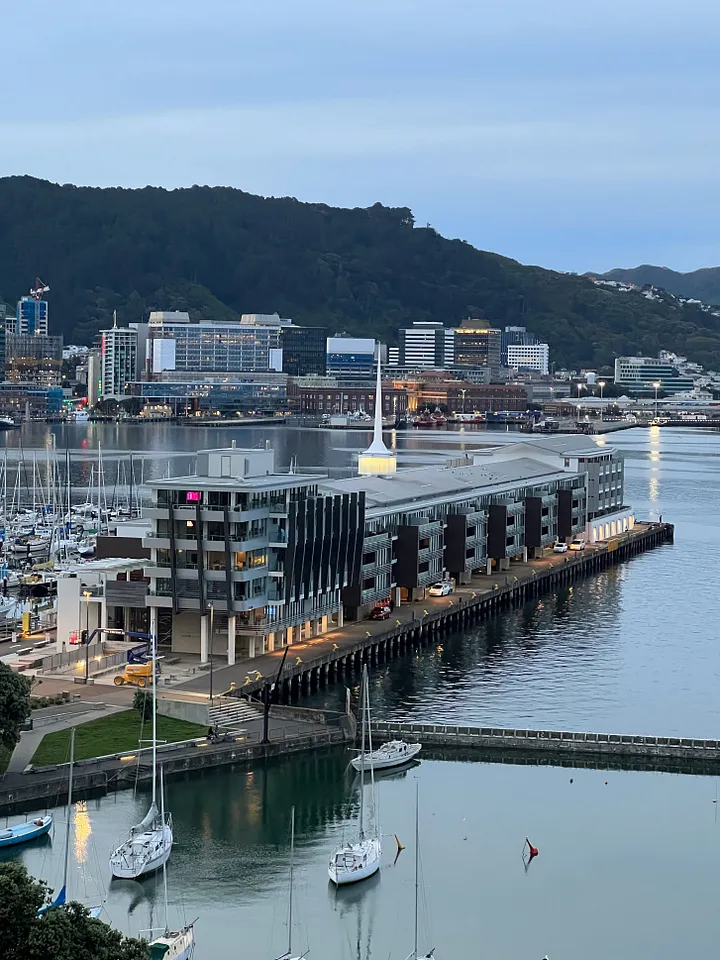
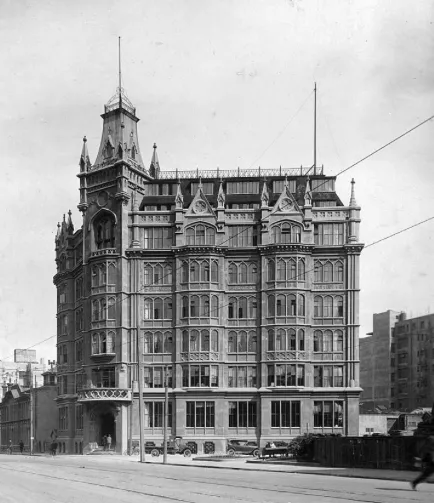
Shepherds’ echos! There must have been something about the lie of the Station land, that on certain days in winter, often when it was foggy with a touch of frost, sound travelled down the valleys for miles towards the Station houses, even from as far away as Moores. So shepherds in good voice, and dogs needing extra instructions from the shepherd’s maker, were on wide public broadcast.
Poor Peter O’Reilly was so embarrassed one day passing our house going back to the office, when Olive happened to say she’d heard him calling on the help of the good Lord and his. 12 apostles that morning. (CliveD).
Bottle hold. The other skill I had to learn as a Pom was how to drink standing up in a packed crowd, clearly a Kiwi skill developed in the 6-o’clock swill days. I experienced it first at a Christmas party in the old woolshed, standing talking with Ken Jury. You held the bottle upright, despite the fact it may be cold, tightly with your left arm, and after draining your glass, you just dropped your arm a bit so the ale slowly filled your glass again, where it was safe even if you got barged by fellow revellers. I could see that Ken had five stars in the art, which I was never able to achieve. (CliveD).
Tradies. The carpenter Colin Rawle was a young man who did great maintenance work around the Station, and lived in a small new house in Whatawhata village. I called to visit him one day and instead of building a workshop outside or attached to the house, he had dug walkways underneath around the piles of the house, so he could stand full height and work all his machines which he had fitted in there. It was like a coal mine and I couldn’t understand why, or what the next occupier or building inspector would think, as Colin said he was off to Whangamata where he knew there was no work, and he could claim unemployment benefit and go fishing!
He was a bit of a political stirrer too and wrote letters to the papers, the last ones Jock Clayton remembers from Dunedin. Ted Purcell and Jim Holmwood were builders on the staff and great blokes, doing a great job like finishing off the woolshed and building bridges, I remember Ted building the bridge out the back near where the bull had been exploded and the stink was fierce. But he couldn’t smell anything he said, as he’d lost his sense of smell from boxing nose injuries! Jim was such a generous bloke and insisted that I borrow his caravan to take the family to Taupo on holiday. He wouldn’t accept anything in return. (CliveD).
Rover in orbit. Technician David Saunders was a very lucky boy. He was driving the old short-wheel-based Land Rover with light frame and canvas top up the track, when a bee flew in the open window and stung him up the leg of his shorts. He reacted instantly and hit the fence doing a complete somersaults down into one of the steepest parts of Moore’s farm. After a few rolls, the Landi ended up on its wheels, on the only tiny bit of flat area in the side of the steep face. It could so easily have kept rolling to the bottom of the gully. His dog did a runner with the shock and didn’t return for three days. With no seatbelt and no real roof protection, it was a miracle he was not killed. He must have been ejected as he was able to walk back to the office and probably change his undies! Getting the old Landi out of there via Moore’s farm must have been a fun job for somebody — no doubt Neil Wood and Jack Beaumont and the old International bulldozer that spent half its life hard at work doing suicidal work on the station, and the other half in bits in Neil’s workshop. (CliveD).
Crook tallies. We had a problem at the station with sheep tallies that never tallied — despite every sheep being tagged and with detailed records on each of them. We were so meticulous that if a dead sheep was put down the offal hole with its tag still in, the unlucky person had to go down and retrieve it! ‘Missing sheep’ was a permanent Hill Country problem for farmers I discovered, but it was never talked about of course. MAF Animal Husbandry advisor John Dobbie and I did an article about it for the New Zealand Journal of Agriculture where (unfortunately )it even got the cover picture.
This got me a call to Ruakura from Research Director Dr Wallace, to explain why I had generated this bad publicity for the Station.
The news even got to Head Office and auditors was sent out to count all the sheep on the Station. They flew up and appeared at the Station in suits (no overalls) and brand new gumboots in plastic carrier bags. The boys rotated the sheep past them in the yards while they counted. I think for a laugh, some boys ran the same sheep past them twice, and of course they never knew. They went away happy as all our sheep were at home — and we never heard any more of it. But the problem remains to this day. The police could do nothing as they needed evidence which we could never find. (CliveD).
Footnote: I learned that the Lands & Survey shepherds used to send in docking tallies to the office that were more than actual, so subsequent losses through the hogget/2-tooth stage that they could not explain didn’t appear!
Overnight visitors. We were excited to move into our new house on the Station before it had any fences or garden around it, and it was painted a lovely pale greenish-yellow colour. There was a wether flock on the farm used to clean up fern and rubbish out the back. They had to come down to the woolshed by the main offices, and after being shorn, Jock Clayton put them in the paddock where our new house was as it was a stinking cold wet night, and the poor buggas were in desperate need of shelter. Three or four spent the night stacked in our front and back porches, and the rest of them squashed hard up against the house walls to try to get some protection from the narrow roof overhang. So when we got up in the morning we had a new paint job — a ring of darker green around the house to contrast with the nice pale green. (CliveD).
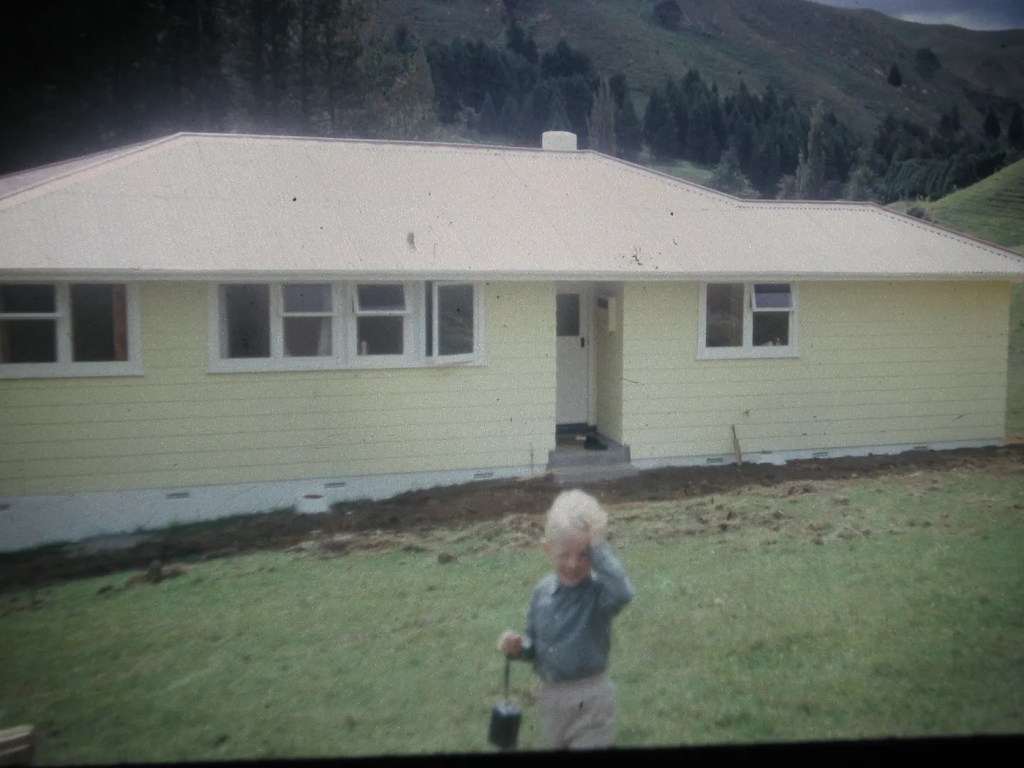
A PJ welcome. It was our first night in the new house on the Station and after tea a dark red, not very clean Holden Station Wagon drove up and parked in front of the house, and out popped Doug Lang — and to a fair bit of our dismay, he was in his shorty pyjamas. Now we Poms had never seen garb like this before, and certainly not in declining daylight! But the other bit of his impressive arrival was a bottle of cold beer to welcome us on board! Now what boss would welcome a staff member like that? Must check if he still has those PJs. The bottle of beer soon went! (CliveD).
FFS — keep back! When the staff arrived for work each morning, they first released their dogs which were kennelled nearby on the bank overlooking the creek and beside the combined old woolshed and offices. Especially on a Monday morning after a boring weekend for the dogs, they excitedly did all the things dogs do, especially restating their social rank and remarking their territory.
Neil Wood the engineer was sick of them peeing and crapping near his workshop, and one morning we noticed a spare wheel laid on the ground near his workshop door, with a mysterious wire going from it going into the workshop. He warned everybody to keep well away and FFS don’t touch it, as he anxiously waited with a wide grin on his face for the first dog to come around the corner and cock his leg. I think he was quietly told that it wasn’t a very safe idea for humans either so it didn’t stay long.
It also didn’t pay you to stop near the workshop with your car window open like I did one morning talking to Peter Burton, when his big red Huntaway ‘Turk’ walked by and peed over the car window into my lap. (CliveD).
Nasty porker. Neil made a sheep crate to take sheep back to their paddocks after surgery in the woolshed, and when it had ended its useful days, he nabbed it as a dual-compartment pig pen for his garden. He was a keen pig hunter and must have come home once with two small pigs to fatten — one put in each section. I went to admire the pigs one day, but there was only one left. When I approached the pen, this savage beast with frothing mouth and massive tusks was gonna leap out and eat me. I commented to Neal about how savage it was, after all the time it had been in his care. He explained funny enough the baarstaard had just turned like that, after he’d shot its mate. That pig was no fool, and had clearly worked out its pending future! (CliveD).
Driver panic attack. On the Wednesday of the famous Ruakura Farmers Week, we had the Whatawhata Open Day when up to 1500 farmers went up and down the single-lane track to the top yards where all the displays were erected. A local bus company provided transport from town up and down the track for the whole day.
On the way up, the driver was on the inside, so couldn’t see over the edge of the track. But on the way down he was sitting on the precipice side with a very close view over the edge. At one Open Day the driver had a total panic attack and could not proceed, but thankfully managed to pull into the side to let cars pass. An urgent SOS had to be sent to town to bring out another driver who was able to continue the journey down the hill. The passengers walked down in the meantime. (CliveD).
Loose singlet. Each shearing, scientists and technicians all took a stand in the woolshed, first to read the tags in the ear sticking out beside the shearer and write it down on a bit of paper before the first belly blow went in, and then pick up the fleece and place it on the scales. It was then thrown on the table for classing and a sample taken for further valuation by the wool staff.
There was great excitement the day the first lady shearer arrived, as it was noticed she was wearing a very loose-fitting low-neck singlet and no bra from what we could ascertain. So there was a bit of competition for who would take her stand. However before starting, she took a bale needle and a full length of twine and disappeared into the toilet to come out with massive stitches around the neck of the singlet, and tied tightly in a bow at the back. I remember a quiet ‘bugga’ being exhaled by some of the boys! (CliveD).
Hot curry. A Sri Lankan pasture scientist (Dr Sitha Paranathan — referred to as Sith) at the Station, when he heard the boys were mustering goats for slaughter to raise money for the kids’ Christmas party, insisted that one of the lads get him a goat and dress it so he could make us all some curry. I duly took a small tupperware container to his house when he said it was ready, and oh boy it was ready! It was fighting to get out of the container, and so hot that I could hardly carry it home. We of course thanked him sincerely for his generosity but declined any subsequent offerings. (CliveD).
More hot curry. When Sith arrived at the Station he was accompanied by his wife and two daughters. As was customary at the station, the ‘magic’ water supply from the creek at the back of the Station, produced another pregnancy and in due course, the Sithaparanathans produced a much-desired boy to their great joy. Sith decided to celebrate his birth in Sri Lankan style with a kiwi touch. This time he got someone to catch him a youngish feral kid goat for a curry. I think he must have been a bit lighter with the chilli as it wasn’t too bad this time, rapidly washed down by the beer. I don’t recall many going back for ‘seconds’ though. (JockC).
A clash of cultures. Dot Short obviously grew up and believed in the mantra of ‘ladies first’. Sith was from a different culture with different values. The pair of them often arrived at work at the same time and were heading into the office (aka the old woolshed) at the same time through a single doorway. Sith always managed to be half a step ahead of Dot so that took precedence in the doorway.
Over time Dot had enough of that and wanted to show Sith that in her culture, ‘ladies first’ meant just that. On this particular morning they arrived at the doorway on cue, but this time she did not hang back and let Sith go first. The result was that Sith collided with Dot and as she had a weight advantage, he literally bounced off her looking astounded at what had just happened. From that day on, Dot had the right-of-way. (David Hall).
Septic tank. I had never met a septic tank before, and when at our new station-house it clearly blocked seen by sewage coming up all the house outside sinks, I wasn’t sure what to do. But I was advised to get a long bamboo pole which grew at the bottom of the hill up to Doug Lang’s house, then lift the mushroom off and give it a blardy good solid poke up and down, to break the fatty crust (no doubt from Alan Kirton’s fat meat parcels each Friday) that you could feel on the top. I kept the pole for future use but made sure that the handle end was clearly marked. (CliveD).
How’s the water — again. The first water supply was from the creek below Joe McLean’s house, with the pump slightly downstream from the bridge to the few staff houses. The stream originated in Johnstone’s property beyond Moore’s airstrip and eastern side of the Kapamahunga range of hills. It was generally a good supply, but during the summer droughts, the flow was limited. As far as I can remember, the water was pumped up to a reservoir above the Director’s house and treated there, before gravity feeding to the offices, hostels, and staff houses. After some years, as the number of houses increased, and staff numbers built up, it was obvious that the current source and supply was inadequate.
There was a better source of water from the Falls area at the back of the farm which already supplied water to the new woolshed, yards and general farm reticulation for stock supply. A new line was installed down the ridge between the Wilsons and Woolshed blocks with tanks placed strategically to reduce pressure before reaching the tanks at the treatment station. This generally worked quite well apart from occasional leaks and losses of supply from the top of the hill above the woolshed in Mount 1.
By the mid to late 1970s, the staff numbers built up to about 60 with 20 houses providing accommodation for some. Other staff lived in Raglan, Waitetuna, Te Pahu, Pirongia, Whatawhata, and many in Hamilton. There was a minibus bringing some to the Station every day. With these numbers, the ‘authorities’ decided the septic tank system was incapable of dealing with waste water and sewerage, so a treatment system was designed to handle all this, and a large filtration tank was built at the bottom of the down track, screened by a group of kahikatea trees.
A network of wastewater pipes were laid, connecting all the houses and offices to a large 10,000 gallon collection tank at the bottom of the down track by the main road. From there, it was pumped over to the oxidation tank. This was full of filtration material — mostly clean river sand — where after filtration, the water was dribbled into the Tunaeke stream nearby. The outflow was tested after some months of use, and found to be purer than the water in the Tunaeke stream, so indicated that the system worked OK. But when the station was closed, the houses across the road were put back onto an upgraded septic tank system. (JockC)
Buzzy welcome home. Do you remember Clive in early January 1975 (when Cameron was born) and we had a swarm of bees on the banksia just the other side of the washing line. I had just come out of hospital with Cameron, and there was no one around such as bee expert Peter Lynch who was on holiday, and you came to the rescue with the kids Nigel and Paul in the Holden station wagon. I got you some netting from the bassinet which we attached to your straw hat and you wore your overalls and gloves. Then you calmly cut the swarm and its branch off the tree, and put it in a big plastic black rubbish sack in the back of the station wagon (with windows open) and the bag tightly tied up. Bees are not supposed to sting when swarming but you were not taking any chances. Then you, the boys and Pete took the bag up to Jack’s block by the yards among some pine trees, cut the bag open with a knife and did a runner! The bees never came back to our place thankfully, which is just as well as I’m allergic to their stings. (Carol Evans).
Jeepers leapers! Another piece of Kiwi advice from our Station neighbours was to light a ‘flea bomb’ or two in the house as you went out the door on holiday. This took a bit of understanding as I was always scared of fire risks, and I didn’t think we had fleas although we had two cats which we treated regularly. We certainly never saw any or were bitten. Fleas in UK didn’t wait for folk returning from holiday, as the cooler climate must have controlled their antics.
But I understood what folk were on about when our neighbour went away for a couple of weeks, and I said I’d pop in occasionally to see everything was OK. On one checkup, when I walked from the kitchen into the lounge, I saw a cloud of what must have been millions of tiny leaping things rise up from the carpet!
Then I knew the story, and remembered enough entomology to realise that after a lengthy undisturbed period for breeding, my vibration on the floor would have triggered a mass hatching of the little buggas. So I did a quick reverse and left, removing my socks on the way out! I knew about flea bombs after that! (CliveD).
Footnote. When at Ruakura I wanted some old files which the office bloke said he’d get them from the attic in the old stables. Up he went but didn’t stay long as he must have triggered that hatching and attack by an army of fleas. He was very clear in telling me he wasn’t going back up there again. (CliveD).
Last drinks please! One Thursday afternoon (payday), three of us decided to go down for a beer at 5pm. In those days pubs closed at 6pm, so it was always a rush to get there and get filled up. As we were about to leave Don Clark decided to join us. Don was first out of the car and we had to tell him to leave his belt with his skinning knife in the car. He reluctantly took it off and left it in the car.
Don ordered first, Three seven ounce glasses of beer with a double whisky in each, and topped up with port wine. I think these are called ‘Depth Charges’. The three of us got a jug of beer each and sat down at a table. Don downed his three drinks at the bar, ordered three more and joined us at the table, followed a bit later by three more. At 5.55pm the barman called ‘last drinks’ and we were expecting to finish our jugs and go by 6pm.
However Don had other plans, and arrived at our table with three jugs for us and three more depth charges for him. So we had 15 minutes to down our jugs before we had to leave. About this time Don reckoned a guy on the other side of the bar was looking at him and he was keen to go over and sort him out, and wanted us to back him up. We declined his offer and were pleased to get him back in the car without any problems. (Stuart Peterson).
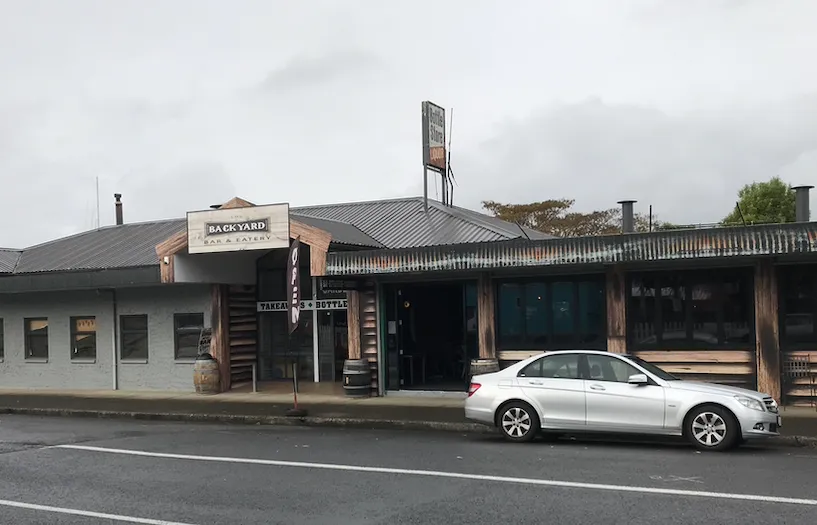
VW Beetle roll. One Saturday Dave Hall, Kit Bird and myself went in our VW beetle for a beer at the Whatawhata pub, and then on to Dinsdale for fish and chips for the family as it was our son John’s birthday. On our return we were nearly home and on the last corner two sets of lights appeared. I assumed one was overtaking on our side of the road so I swerved to the left, and the tail of the VW caught the tail of the car coming from Raglan. The VW flipped and rolled at least six times before coming to a stop on its side. I asked if the others were ok and both replied ‘yes’ so we climbed out the window and put the car back on its wheels and after talking to the other driver, drove home with dinner. I had cut my head on the car mirror and was bleeding so I wasn’t looking too good and upset everyone, especially Carole, as unfortunately that was the end of our great little car. (Stuart Peterson).
Footnote. There were only seat belts in the front of cars in those days, and I reckon in the rotations, the back window must have been open and my backside must have poked out and scraped along the road from the tar marks on the seat of my pants! I well remember wife Carol NOT being very pleased when we got to their house— to put it mildly! (David Hall).
If you’re familiar with the great John Clarke’s character Fred Dagg, you might remember his adventures with a car on a country road – have a look here.

Station bikes. I bought ‘Pee-Wee’ powered by a Villiers 125cc engine which was pretty gutless. I think it cost less than $100 and was the first bike on the station. There were still two horses on the station kept in ‘the horse paddock’ by the offices, but no willing users among the young technicians. It would have taken you all day to get up to the top yards in any case. Then a Kiwi-made ‘Mountain Goat’ arrived — not the greatest machine ever made for hill country with small wheels and low ground clearance.
It originated from Taranaki and was hand built with 120 units per year being made. Jack Beaumont had to test it to its limits of course (Jack being Jack), one day by riding it up the steep 45-degree fence line in the Falls paddock. Both survived. Then the Czechoslovakia-made 175cc Jawa came on the market and despite being heavy, looked like an ideal farm bike with double seat and plenty of room on the back for a dog carrier and passenger.
But the office bureaucrats wouldn’t agree, so Superintendent Doug Lang (noted along with manager Joe McLean for innovative solutions) suggested staff should buy one out of their own pockets, and get running expenses from MAF which Ray Armstrong and I willingly did. The bikes did great service till the Suzuki 125cc came along, followed by 100cc Yamahas. Ray and I both had carriers built in the workshop on our Jawas and taught the dogs to ride on them.
I think my dog ‘Sharp’ was the first to be transported by motorbike. Some riders shared their bike with three dogs — two on the back and one on the petrol tank and their knees. The dogs had a special order of seating to the command -’get up’ and didn’t like when a human passenger squeezed in and pinched a spot. There was a real fleet of motor bikes at the Station over the years in various states of health. Ian McMillan treated his bike like a horse and rode it very gently up and down the track — so much so, that being a two-stroke, it soon got clogged with carbon. I always fixed it for him with a full-rev burn up the track leaving a long blue smoke trail behind that hung in the air for ages.(David Hall).
Bikes and more bikes. David Hall was a keen ‘ trial’ bike competitor and his enthusiasm seemed to influence the other young lads on the station.
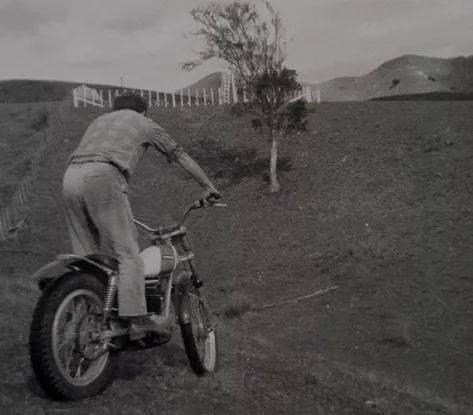
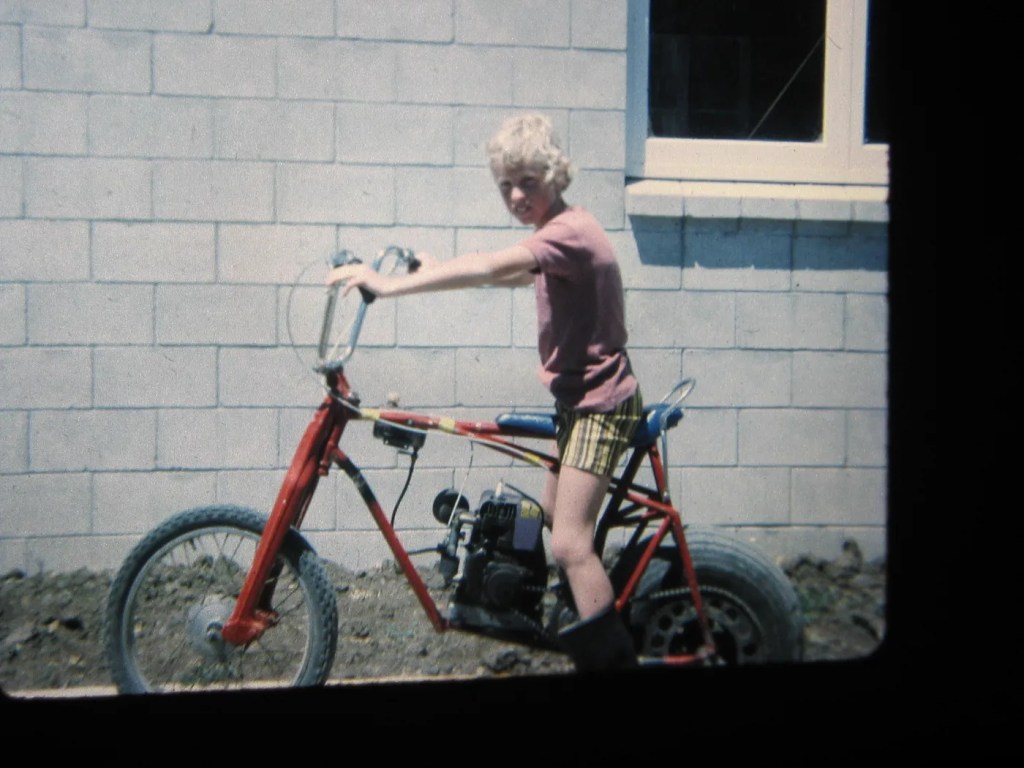
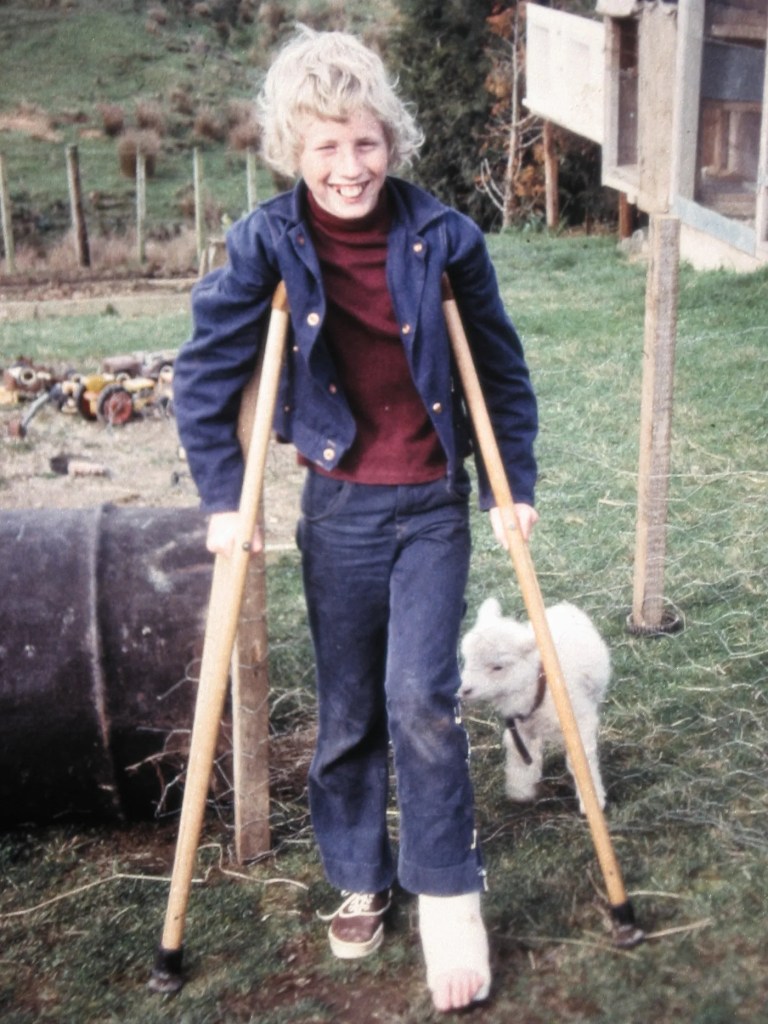
Daredevil McMillan. There’s a story that grew with the telling (last told by me to much laughter at Ian’s funeral), of Ian one day fancying himself as a motor cross rider to copy the young guns, and instead of going the safe way along beside the creek and then slowly around to get on to the uphill track to the yards, he thought he’d do what all the young Station hoons did, and just take a blast up a very short very steep bit of the bank on to the track. Disaster — momentum, centrifugal force and gravity ruined the performance, and Ian and the bike landed backwards into the creek. He was hauled out by the boys bursting to retain their hysterics! (CliveD).
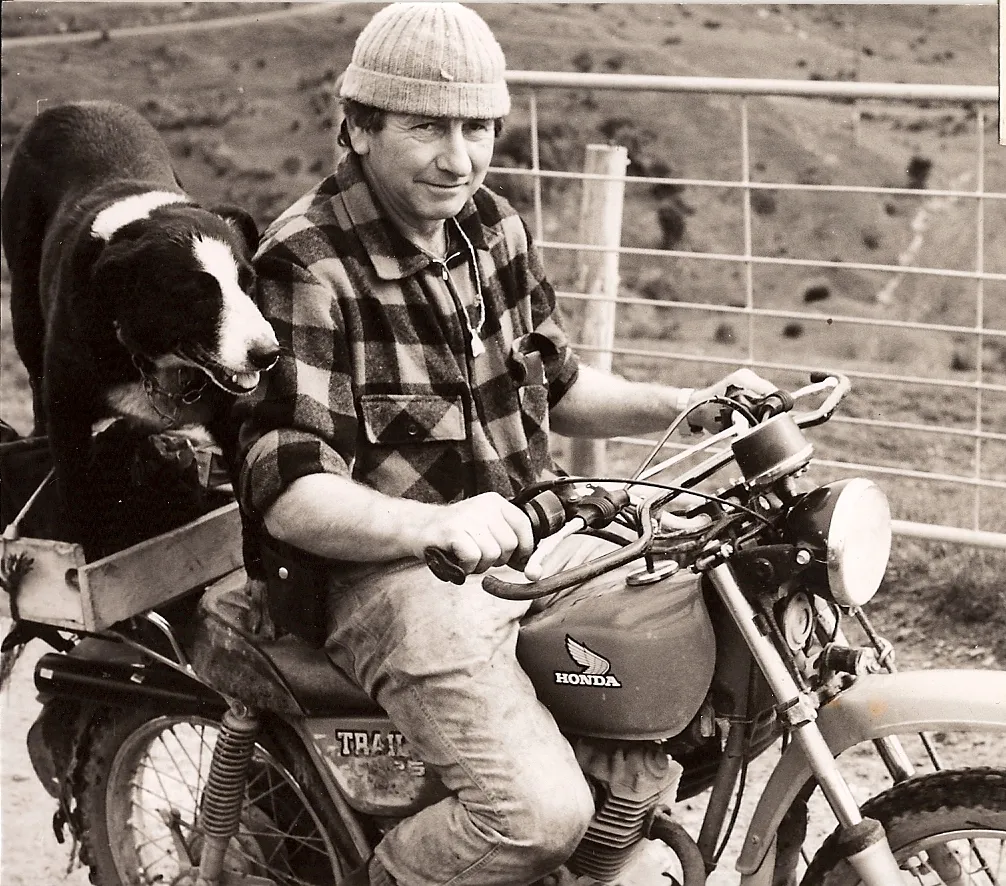
Pranks and payback. Young smart-ass Mark Flintoff thought that it was great fun to disconnect the brakes on my bike before we both came home on the down-track from the top yards. He enjoyed seeing me getting off the bike with no brakes, twisting the handlebars and eating gravel in the process of trying to stop before hitting the fence. But watching him trying to start his bike every km or so was my payback as at Lincoln, a small-motor mechanic tutor showed me how putting a slip of paper in the fuel lines was just enough to slow the fuel flow, but not to stop it altogether. Watching all the kicking and swearing were relaxing entertainment, while I waited for him to get going again! (Aaron Malthus).
Self Pranks. On a stinking hot day and after a very long walk, Alf Richards turned up at the Barker’s smoko hut — fuming! His quad had broken down up on Back Range and refused to start. After transporting him back to the quad, and a quick assessment, I untwisted his fuel breather hose and away it went! After more expletives I rapidly buggered off, as he was always a tad loose with words. Same quad a few months later caused him to have another long walk back, this time after failing a hill climb with a trailer. He proudly told our boss Shane Hill that although he’d crashed it, the quad still started. Shane got to the crash-and-burn site to find a round ball of twisted metal — that still started! (Aaron Malthus).
Bike time trials. Maybe these were fun, but many a time could have been fatal! The course started from Barkers block and finished at the bottom of the down track near the offices. It was about 6km and covered some hairy riding in loose metal. After many attempts and a few broken gates, one day I managed to stay racingly close to Chris Boom, but thought him a gonna as he went sideways off the track at speed on the treatment-pond corner. But then suddenly he was back on the hard again, gunning for home. Later he claimed Jesus looked after him on that corner! I assumed he thanked him sometime or other! (Aaron Malthus).
Bike training. With ‘Health and Safety’ concerns, because of the massive ACC injury and death stats, around 1999 we had bike training sessions on a bit of the track, including a steep hill climb. There was only one person who ever crashed — the instructor, who blamed the bike! Steel gates were the hazard as they were not always easy to see if closed, and in poor light as they got weathered and didn’t shine. My mate Pete would close a gate after him to try to catch me out, so I’d then have to stop and open it. Margaret Scott tied cloth to the gates for better visibility. I think my problem was not visibility but speed, and I soon slowed down after having to rehang a few gates! (Aaron Malthus).
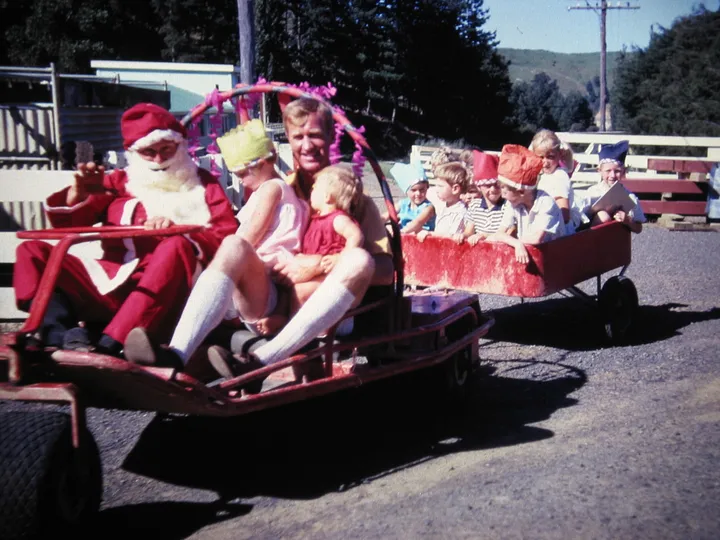
The Gnat. Then there was the Gnat with two arriving about 1970. The first one was a Villiers 125cc unit with a large muffler sticking out the back. Reverse was engaged by switching the engine off then re-starting by turning the key the opposite way. The wide seat could take two people (or one and a ram) but a third smaller person could squeeze in the middle — which was usually the records technician.
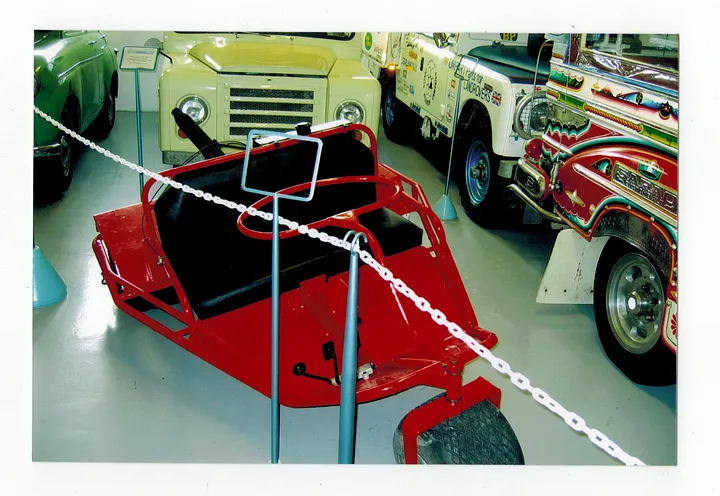
The two wheels at the back had wide tyres and were tiny and chain driven, so they regularly got clogged up with mud. It was controlled by a large handle bar which turned the single front wheel. Of course after arrival, the Gnats had to be ‘stress tested’, especially for climbing ability with such a low centre of gravity, and one person (who shall not be named) drove one up a steep slope on Barker’s to test this, hitting an unseen Manuka stake, and doing a backwards flip — surviving to write this note! (David Hall).
Flatty Gnatty. I remember them always covered in mud! Two had Villiers engines and one had a Honda engine Mk 2. They were a novelty to me, as I had never seen one on any of the farms I worked on. One Saturday afternoon very early after our arrival, Rell and I took our afternoon tea and one of the Villiers ones out through Barkers and up into the bush on the track past the old hut in the area where the Station used to run a group of cattle over the winter. A short distance further on there was a steep hill into the bush. Going up the hill the front wheel jammed in a deep rut and the tube punctured. It was a long walk back to the workshop to take the front wheel off the other gnat, load it onto our Vespa motor scooter, and then head back to the bush. The extra load, plus Rell was a little too much for the 90cc scooter but with a bit of pushing, we got there, changed the wheel over, and drove back to the workshop. On Monday morning, nobody knew anything, except that one of the gnats had a flat tyre! What we did as young folk! (Roland Sumner)
Footnote. Google says that J Cameron Lewis Ltd in Christchurch was asked to make a ‘go anywhere’ vehicle for NASA, believe it or not, and between 1965 and 1973 they diverted their skills to make1680 vehicles. A lot of the thinking and experience (both good and bad) apparently eventually ended up in the ATV (first the three-wheeler) and then the much safer four-wheeler recreation and then farm bikes.(CliveD).
They had an electric start with the key on an electrics box behind the drivers seat. You turned the key one way to start the motor in a forward direction, and turned it the other way to start in reverse. In effect you had 4 forward gears and 4 reverse! (David Hall).
Ram scraped scrotum. The deck of the Gnat was very low to the ground, and I realised this one day when David Hall and I were taking a massive Merino ram to a new location on Barkers block. David was driving and I was sitting next to him, holding the ram sitting on its bum in front of me between my legs. So I couldn’t see much of what was going on. When I did manage a quick view ahead, I realised the ram’s massive scrotum was hanging over the side of the Gnat getting regular scrapes from the track when we hit a bump. It took two hands to haul the poor blokes purse back on board! Jock Clayton remembers carrying all sorts of loads on the passenger’s seat like hay bales for feeding out when you couldn’t get a tractor, and not being able to see where you were going, or what the terrain was like. (CliveD).
Bail out bail out! I was entertaining Shaile Searl, a visiting American scientist at the Station and took him for a spin around the station on a Gnat. We ended up in the steep paddock next to my Superintendent’s house where we were trialing different types of hybrid populars to stabilise hill country. We got to the top of the paddock, and turning around to come down again — we had no brakes! As we were gaining speed, I told Shaile to bail out and helped him over the side with a push before I bailed out too. The Gnat continued on its way, increasing speed with the front wheel and steering tiller bar spinning like a top. Can’t remember where it ended up (inevitably in Neil’s workshop), but we sat down for a while after the experience taking deep breaths and enjoying the view. (Doug Lang).
Stuck in mud. I found out the hard way that Gnats was not a ‘go-anywhere’ vehicles, when driving across some soft ground with the dogs on board, and we came to a dead stop. We were bogged and were not going anywhere! The dogs loved the gnat, and when I got off they were happy to just remain seated! So I kept the engine running, engaged forward gear and turned the tiller and front wheel full circle, and heaved on it to get some forward motion to get out. The job then was to dislodge the mud from the unprotected chain drives on each back wheel to get home. (Ray Armstrong).
Gnat outriggers. The Honda Gnat (maybe the others also) had two outriggers which slid into the sides of the Gnat frames, and could be used for carrying all manner of stuff. Two or more bales of hay converted the gnat into a ‘moving haystack’, and they were also used to transport live or dead sheep, posts and battens etc. With a little tow ball on the back, the gnat could drag a small hay or meal feeder into a new position. The gnats had a very bouncy motion while being driven, and I’m sure they contributed to some of my back trouble. (Jock Clayton)
Bucked off! After finishing work in Back Range 2 on a late afternoon, I couldn’t resist having a joy ride on the gnat. I did several fancy runs and turns along a slope and had great fun until the left wheel struck a small Punga stump. The force bucked me off and while sitting on the ground, the gnat did a great loop past me and headed at some speed towards the gully. I managed to partly board it but it was too late! Over we went, but fortunately there was a sandstone ledge that stopped us going further. There I was, well and truly jammed in at a 45 degree angle, the gnats nose on the ledge and the back wheels just perching over the grass. I couldn’t let go of the gnat until I had it stabilised it with the aid of some sticks. It took me well over an hour of pushing and shoving to haul the beast back onto the grass. I considered myself very lucky that the ledge was there, as it was a long way down to the bottom of the gully. So it was not a good idea to skylark on a gnat on hill country! Can’t help feeling a bit self conscious telling this story, which you are the first to read! (Bram Uljee).
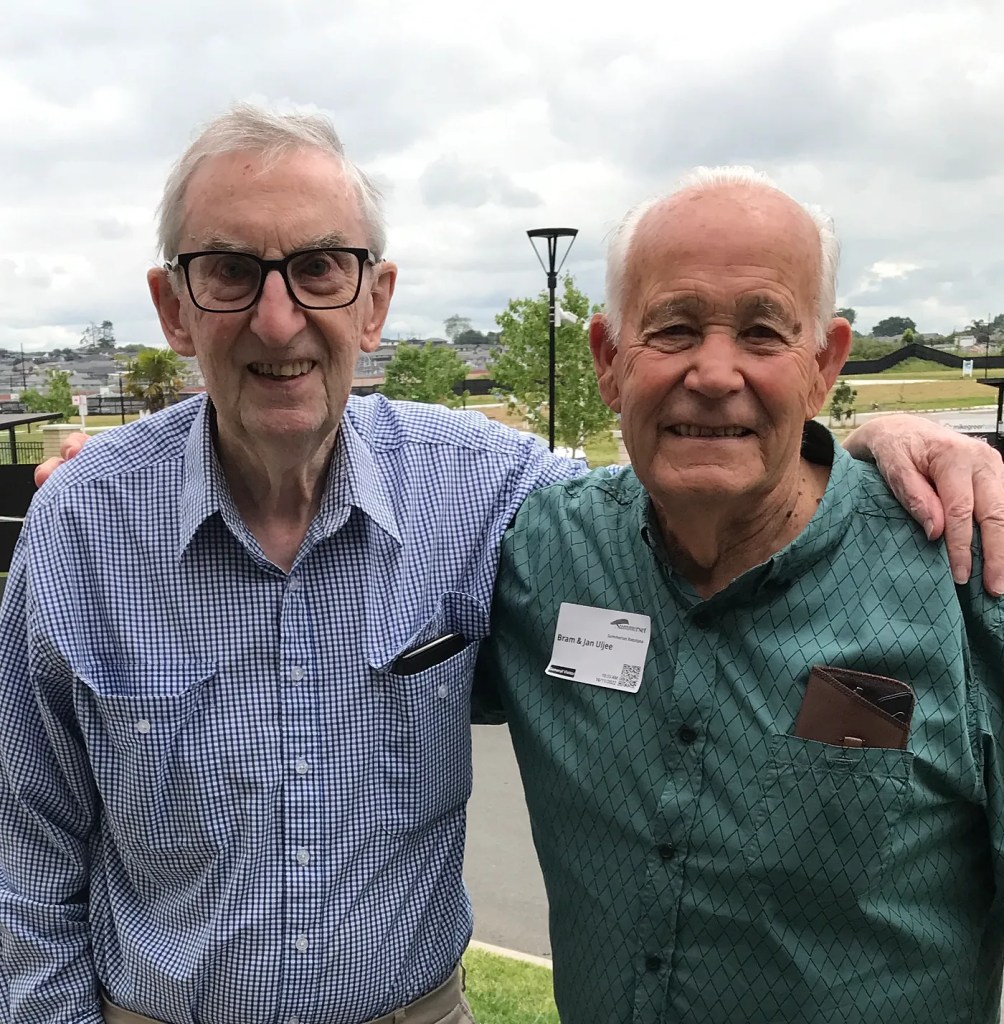
Driving tests. Because the Station was split by the main Raglan road, when we rode the short distance across on a farm bike, by law the bike had to be licensed and so did the rider — and wear a helmet! So Ray Armstrong, David Hall and I had to go to the Raglan Council offices in Ngaruawahia to take a motorbike test. We hauled a Jawa on to the back of the Bedford farm truck, and tootled around the streets at snail’s pace being observed by a tester. We all passed!
Same deal for the ‘light farm truck’ I remember, which we had to load with some concrete fence posts to make it heavy enough for the vehicle class. Again we all passed. There were not many streets in the town and certainly no traffic lights so the challenges were minimal. I still have motorcycle on my DL but I cancelled my ‘light vehicle’. Didn’t think I’d need to cart any more concrete posts around! I remember Sue Rowe was a fellow candidate for the station truck. (CliveD)
Firewood. Murray Bigham, always the consummate organiser, decided we would hire a chainsaw and cut a tree down for firewood up near the weather station. So a group of us joined in, me, Pete, Geoff Nichol and Trevor Wadams all on the axes and Murray was the chainsaw man. It was a stinking hot day, Murray’s boys Michael and David had joined us and while we had a break, they put the chainsaw on the other side of the ute in the shade.
Fair enough, except that Murray wasn’t aware of it and backed over it. The hire company weren’t too pleased and charged for the damage and we all chipped in. In hindsight it would have been cheaper to buy a trailer load of firewood but then this story would never have been written. (Carol Evans).
Coal for free. Another time, always a man for great ideas, Murray decided there was coal under ‘them thar hills’, and arranged with the Johnstone’s (who operated a proper coal mine next door) to have access to one of the old tunnels into the mine which went up under the station hills. He got half a dozen coal sacks, picks and shovels and I think the same crew bowled up to the entrance with their sleeves rolled up to retrieve some free coal for winter. Maybe some 2 to 3 hours later, after picking and hacking and sweating at a rock-solid wall, we managed to get about half a bucket of coal chips to take away, plus a great respect for the early miners. The coal was a lot cheaper down at the proper mine. (Carol Evans).
Constant dead fish. It wasn’t until we’d killed at least a dozen of the kids’ gold fish (and helping the pet shop sales) that we realised their deaths may be the result of the water from the creek over the fence from our house, as it came out of what we called the ‘mine hole’. Nobody knew about the hole’s origins but it was well fenced with no entrance and it never dried up. There were never any eels or frogs in it and it dawned on us that it probably was very acid. The water from the hole never did the kids any harm, as they spent hours developing their engineering and management skills blocking up the drain that flowed from it into the main creek, that eventually went under the road to the Waipa river presumably. The fish thrived on the Station tap water after that, as did the tadpoles from that wee pond in the paddock above the new woolshed. (CliveD)
Mine hole. The ‘mine hole’ on the Station next to Clive’s house was in fact the main discharge for water pumped from the Johnstone’s coal mine and flowed continuously while the mine was in operation.(Jock Clayton)
Penitent Henry. With so much work going on developing the Chinball bull mating harness, there was a big need for vasectomised ‘teaser’ bulls. Henry Bishop, based at Ruakura was the MAF vet at the time, and used to come out to the station and do the operations. Poor Henry suffered from some terrible spinal condition which had happened years earlier in his life, but it never deterred him from carrying out his dedicated work, or affect his great humour. But his affliction meant that he could only bend at the knees. I remember going to the yards one day and here he was kneeling as if in prayer on the ground, and hacking away behind a great standing bull with a scalpel, cutting a slit at the top of the scrotum, and taking out a length of the spermatic cord. It was his practice to take out a fair length (around 10cm) as it had been known for these ends to join up again, and the bull to remain fertile.
He would then come back some time later with a massive long black torpedo-like device, force it into the poor bull’s rectum, switch on the current from a battery, and collect the dribble from the bull’s prepuce. I couldn’t bear watching this so left, but thankfully more advanced smaller devices were invented after that. Henry also vasectomised rams but he did them on the wool-table so he didn’t have to bend. A great bloke who also organised the Ruakura concerts and acted in them. (CliveD).
Mike Blockey. Doug Lang met Mike at Armidale, then at CSIRO Werribee and must have told him what was going on at the Station. Mike was a vet interested in the function of the tiny pituitary gland that sits below the brain and controls a host of hormone functions, so he came over with wife Margo and they were very popular at the Station — despite being from the larger island.
But the poor lad had the mother and father of stuttering afflictions, and it was painful at times watching and waiting for him to get his words out and not wanting to help him. I remember one morning joining his group of technicians to see what they were up to for the day, as they had a sheep already for surgery strapped on the table.
Mike started off — ‘Wha- wha- wha; wha- wha -wha’, but the rest would just not come out. In total frustration he looked down at the floor, took a deep breath and roared — ‘OH FUCK’! That sure cleared the blockage! Doug met Mike years later and he’d had quite challenging therapy thank goodness, and had got rid of his affliction speaking very slowly. Such a great bloke — even though he was an Australian! (CliveD).
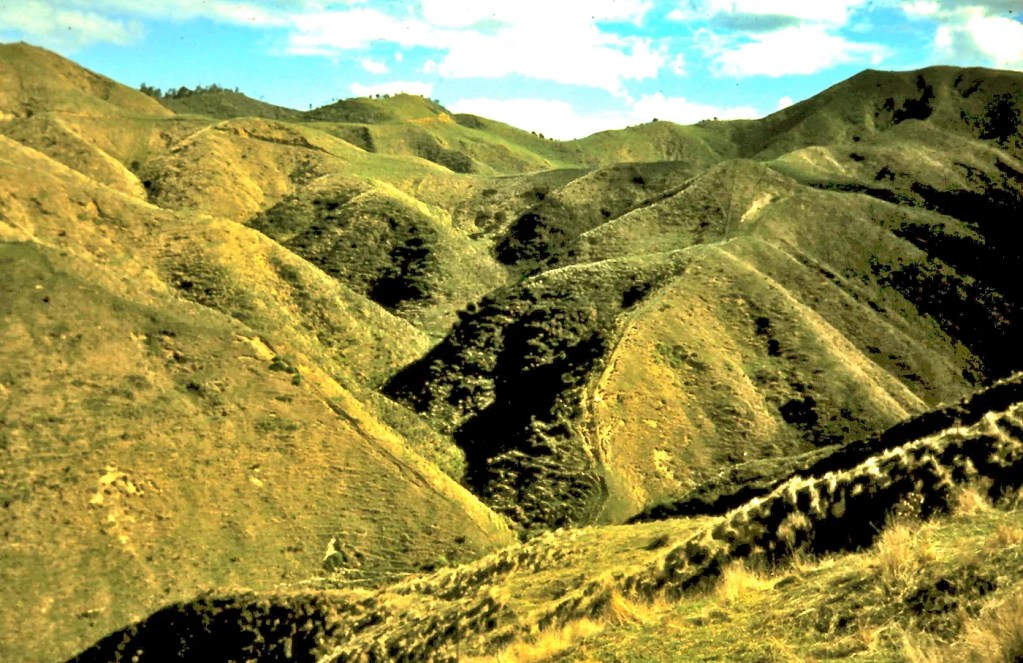
The Himalayas. On the Dalton’s 30-day sea journey from London to Wellington in 1968, they met a family that also happened to settle in Hamilton. I remember Clive inviting them to visit the Station and Clive was working way up the back in the paddock called ‘Sunshine’ on some clover trials with David Hall. After the greetings, the chap said to Clive — ‘Gosh you told us you were coming to a Hill station and not to the bleeding Himalayas! For quite a while that expression stuck with staff, and they referred to the area as ‘the Himalayas’. (Bram Uljee).
Fencing Falls and Fern. Doug Lang got hold of some money to spend on fencing and in a short time a mountain of fencing gear grew besides the main road at the bottom going up the track. Joe McLean the farm manager asked me if I would mind taking some 4000 fence battens up in the farm truck to a staging area on a flat part of Mount 1 paddock. For several days this staging area was a hive of activity as strainer posts, intermediate posts, gates, wire and boxes of staples were carefully bundled up with ropes for a helicopter to distribute along the fence lines. Doug had the foresight to engage a busload of prisoners from Waikeria prison to lay out the fence lines. It all went like clockwork to get the job done — and it was a top job too when finished. (Bram Uljee).
Endless fencers. In the summer of 1963 or 1964, there was a large re-fencing project done out the back of the Station on boundary and internal fences. A couple of fit young fencers stayed in the hostel for the duration of several weeks, and they were out on the job every day about 5am and came back about 7 in the evening. They were so good and fast that Joe and Neil were busy full time keeping up with them, bulldozing the old lines and laying out the new material. One was called Vitus Ackermann (ex Swiss guy and had worked at a Ruakura farm previously), and the other, Stewart Phillips came from a farming family near Otorohanga. Stewart was the only fencer I heard of who called in two or three years later to ask how the fences were performing. We told him about 1 or 2 strainers had moved or footed post lifted. He said -’Can’t have that’ and returned next day to fix the problems. (Jock Clayton).
The farm truck. One early evening I took the truck up the track to check on the water pump. Just above the cattle yards the track was fairly steep and there was barely a big enough flat area of ground to park the truck, then to open the gate into Mount 1 paddock. It was quite windy as I parked the truck to open the gate, and as I opened it a strong blow came down the valley.
It was so strong that I saw the truck being blown backwards. All I managed to do was to get as far as the running board to put the hand brake on. But it was too late and the truck gathered speed and slid down the hill for about 30m, demolishing a brand new fence that Joe McLean and Jack Beaumont had just erected. I felt sick having to tell Joe what had happened but I kept my job! (Bram Uljee).

Feeding cattle in the gully. The gully behind the cattle yards was full of gorse and a mob of Angus cull cows was kept there to trample the gorse. We fed them hay from above to encourage trampling and for the grass seed to germinate. It was only possible to throw the hay so far, and over smoko a plan was hatched to slide the bales down on a ‘flying fox’ attached to a stainer on the opposite side in the Long paddock.
Neil Wood made up a cutting tool from a mower section, which was fastened on the wire, half way along which worked to a point, but the hay bales burst open over the same spot all the time. A wheel at the opposite end for the wire to go round would have been the answer, but it never got that far. Never mind it was a good try. (Bram Uljee).
Helping Don Clark. One day the shepherd Don Clark asked me to help him muster some sheep in an 80 acre paddock that was divided by a creek with fairly steep sides, so the plan was for us to muster one side each, then meet up at the gate at the top. We set off at about 6am and initially the sheep drifted nicely along the slopes in multiple rows. I had a dream run, but Don struck trouble with his mob as the sheep just did not flow well. I got to the gate in good time and had to wait for Don’s mob to join.
He was still some distance from the gate and as the sun was now high, my mob was breaking away to find shade. The dogs could not hold them any longer and as Don was nowhere near, we had to abandon the muster. He was not very happy and his unforgettable vocabulary expressed his mood. (Bram Uljee).
More from the Fern. One day while I was mustering the Angus herd, where the mob on the opposite bank drifted nicely along in several rows. I noticed a cow giving the one in front of her a shove, which put her off balance causing her to tumble a few metres down hill and slowly rolled over a steep side. She was unable to get to her feet and rolled quite fast further down hill. I lost sight of her and went down to the creek to investigate. Much to my amazement the cow had hit the opposite bank so hard that it had collapsed completely covering her. There was no sign of the cow, causing the water to rise and flow over the new dam she had created causing it to collapse. There was nothing I could do. (Bram Uljee).
Blockey test. Mike was also interested in bull libido, as so many young bulls reared in homosexual groups from weaners to 18months of age, and didn’t know what to do when they met a female on heat. So they wasted vital mating time learning the business. So Mike’s test was to hold a line of cows in headbails, and then let each young bull from the group in, and count the number of effective mounts he clocked up. I remember seeing this being used in a breeding programme I was involved with, but I could see it would not last long in NZ because of animal welfare issues, as it was not hard to describe what the cows had to suffer as rape! But the fact remains, libido can vary enormously in a groups of bulls reared together, and it’s not automatically linked to fertility (sperm count). (CliveD).